

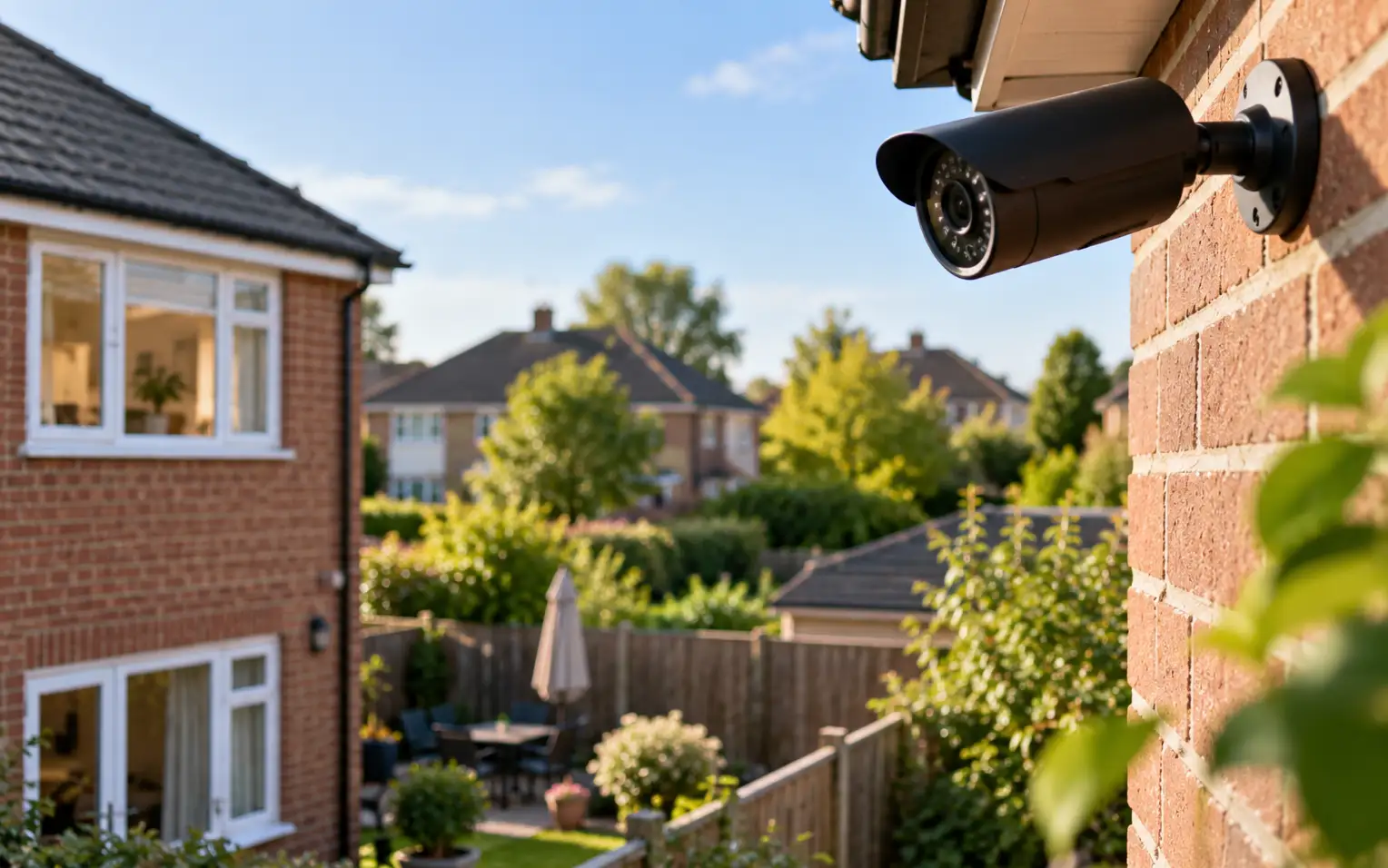
You notice it almost by accident — glancing up at next door’s new video doorbell and realising its lens isn’t just covering their own porch. It’s angled slightly wide, and from where you’re standing, it looks like it can see straight down your driveway, or across into the kitchen window. Is that actually allowed?
The honest answer sits between the two things people usually assume. It’s not simply “your neighbour isn’t allowed to film you,” and it’s not simply “it’s their camera, so they can point it wherever they like.” What actually governs the situation is where the surveillance extends, what information it captures and whether the intrusion can reasonably be justified by the security purpose behind it.
A video doorbell that happens to record a few feet of pavement as visitors approach the house is a very different proposition from a camera routinely filming somebody else’s patio. Both can bring data protection law into the picture, but that doesn’t make their impact on privacy remotely equivalent. Nor does it automatically make either camera unlawful.
The distinction matters because home CCTV has become remarkably ordinary. Video doorbells, floodlight cameras and inexpensive wireless systems can capture wide areas, detect movement and record conversations without their owners necessarily appreciating how far the surveillance reaches. Many are installed for perfectly sensible reasons, and the people operating them may have no particular interest in what their neighbours are doing.
But knowing that next door probably bought the camera to protect their own property doesn’t necessarily make you comfortable sitting in a garden that appears to be under observation. And where the equipment is deliberately directed towards your windows, or records your movements whenever you step outside, the concern goes beyond simply disliking the sight of a camera.
The useful question isn’t whether neighbours are allowed to have CCTV. They are. It’s whether the particular way they’re using it goes further than the law allows.
A camera can cross the boundary without necessarily breaking the law
UK data protection law contains an exemption for personal information processed purely for personal or household purposes. Where somebody’s home CCTV records only within the boundaries of their own private domestic property, including their garden, that use will generally fall within the exemption.
The position changes when the system captures identifiable people beyond those boundaries. Recording a neighbour in their garden, people using a communal entrance or pedestrians passing along the street can bring the activity within data protection law. The householder operating the system may then become a data controller, with responsibilities concerning the information being collected.
The Information Commissioner’s Office explains the distinction in its guidance on home CCTV systems. The boundary is important because it determines when the domestic exemption ceases to protect the processing, not because every recording beyond it is automatically prohibited.
This is where neighbours can end up arguing about the wrong thing. One household insists that the camera is illegal because it sees beyond the fence. The other insists that nothing can be wrong because the device is attached to their own house. Neither position answers whether the recording is justified.
A homeowner may have a legitimate reason to capture a limited amount of space beyond their boundary, particularly where doing so is difficult to avoid while protecting an entrance. What matters is whether the information collected is necessary and proportionate to that purpose, and whether the operator meets the data protection obligations that follow.
The distinction is about what the system actually captures, not merely where the lens appears to be pointing. A camera that looks directly towards your garden may have a narrower recorded view than you imagine. Another might appear to cover only the neighbour’s driveway while its wide-angle lens records considerably more of the surrounding properties.
For the person concerned, establishing what is actually being recorded is therefore much more useful than trying to judge the lens angle from the pavement.
It is also worth recognising that data protection law is concerned with the processing of personal information, not simply whether recordings are being saved indefinitely. A live view, motion-triggered recording or system that briefly stores footage can still involve the processing of identifiable people’s information. Conversely, the fact that a camera can theoretically see a neighbouring building doesn’t, without more, establish that it is collecting personal information about the people living there.
The Government’s guidance on domestic CCTV encourages householders to minimise recording beyond their own land and consider privacy filters where neighbouring property falls within the view. That is not an instruction to abandon home security. It is recognition that the same security objective can often be achieved without unnecessarily recording people next door.
Why your garden is different from a few feet of pavement
Consider two fairly ordinary situations.
In the first, somebody installs a video doorbell beside the front entrance of a terraced house. The camera records visitors walking towards the door and inevitably captures part of the public pavement. Depending on the angle, it might also include a glimpse of the house opposite.
In the second, a homeowner mounts a camera high on their rear wall, giving it a clear view across the neighbour’s patio and most of their garden. Every time the adjoining household sits outside or walks across the lawn, their activity falls within the camera’s coverage.
The law doesn’t treat these as identical intrusions simply because both cameras see beyond the owner’s boundary. The first may involve a limited amount of recording that is reasonably necessary to protect the entrance. The second calls for a much more convincing explanation of why monitoring somebody else’s private space is needed.
There isn’t a universal rule that a doorbell camera becomes unlawful whenever it captures pedestrians or part of a neighbouring frontage. On many streets, especially where houses open directly onto the pavement, avoiding all recording beyond the front boundary would make the equipment difficult to use for its intended purpose.
The position is harder to justify where substantial areas of a neighbour’s garden are being monitored routinely. Gardens are places where people spend private time, entertain friends and go about activities they wouldn’t necessarily expect to be observed by somebody else’s security system. The more of that space the camera captures, the more important it becomes to explain why the intrusion is proportionate to the security concern.
Recording through a window raises a more serious privacy issue again. A camera that can capture identifiable people inside a kitchen or living room may reveal considerably more personal information than one showing a driveway or public footpath. There isn’t a separate rule making every camera capable of seeing through glass automatically unlawful, but ordinary home security is a much less convincing explanation for recording what happens inside another person’s home.
The same considerations arise with shared entrances and communal areas. A camera outside a flat may legitimately be intended to protect its occupant, yet also cover part of a communal hallway. Limited recording may be justifiable, depending on the circumstances, but monitoring an entire shared landing or entrance used by several households creates a different level of intrusion.
Modern camera features can complicate matters further. A fixed camera might capture the edge of a neighbouring garden incidentally, while a motion-tracking device may repeatedly follow activity beyond the owner’s property. The underlying legal principles are the same, but the amount and nature of the information collected can become more difficult to justify.
There is no need to assume that every tracking camera has been deliberately configured to follow a neighbour. Automatic settings may be responsible. But if the system activates whenever you walk around your own garden, or follows your movements across areas unrelated to the owner’s security, asking why those features are necessary is entirely reasonable.
Audio recording deserves particular attention, not least because it is easily overlooked. People naturally concentrate on where a camera is pointing, while the microphone may be capable of picking up conversations at a much greater distance than expected.
A video doorbell might reasonably use sound to allow a homeowner to speak to somebody standing at their entrance. That doesn’t necessarily justify routinely capturing conversations taking place in a neighbouring garden or elsewhere beyond the area the camera is intended to protect.
The ICO advises people operating domestic CCTV to consider whether audio recording is necessary, as well as whether they are capturing more images than their security purpose requires. A system collecting private conversations can present a considerably more intrusive situation than one recording the same area without sound.
These differences are important because the answer is rarely found in the camera’s make, model or advertised capabilities. It’s how the equipment is being used, and what that means for the people it records, that matters.
Your neighbour doesn’t usually need your permission
The idea that a neighbour must obtain your consent before operating CCTV is one of the most common misunderstandings in this area.
Where data protection law applies, a homeowner may rely on legitimate interests rather than consent as the lawful basis for recording. Protecting their family, property or vehicles from crime can be a legitimate reason to use CCTV, even if the system incidentally captures identifiable people outside their boundary.
But having a legitimate security concern doesn’t justify collecting as much information as the equipment can technically capture. The homeowner must consider whether the recording is necessary and balance that interest against the effect on other people’s privacy.
A doorbell that includes a limited view of the pavement may be relatively straightforward to explain. Recording a neighbour’s private garden continuously, when the same security objective could be achieved by adjusting the angle, is a different proposition.
The responsibilities extend beyond the initial decision to install the camera. Where the operator is subject to data protection law, they should collect no more personal information than necessary, be appropriately transparent about the surveillance, keep recordings secure and avoid retaining footage for longer than is needed. Depending on the circumstances, that may include suitable CCTV signage and dealing properly with requests from people who have been recorded.
There is no universal rule that domestic CCTV footage must always be deleted after a fixed number of days. The appropriate retention period depends on why it is being kept. A short recording retained because it captures evidence of an incident may have a legitimate purpose, while storing routine footage indefinitely without a convincing reason raises a different question.
A surprising amount of unnecessary recording can often be avoided without removing the camera. Many systems provide privacy-masking features that allow part of the image to be obscured, leaving the owner able to monitor their entrance without recording a neighbouring window or garden.
Adjusting the angle or disabling unnecessary audio may achieve something similar. Changing motion-detection settings can also help, although it is worth distinguishing a motion zone from a genuine privacy mask. Preventing movement in a particular area from triggering an alert doesn’t necessarily mean that area is excluded from every recording.
For most well-intentioned homeowners, these adjustments are considerably easier than getting involved in a prolonged dispute about whether the device is legally permitted. The camera can continue serving its intended purpose while the neighbour’s privacy concern is addressed.
And that is generally a more useful outcome than treating the disagreement as a contest between one person’s absolute right to security and another’s absolute right not to appear in anybody else’s footage. Neither right operates quite that way.
What can you actually do if you feel watched?
Most people aren’t interested in becoming experts in data protection law. They want to know whether next door’s camera is recording their garden and, if it is, whether anything can be done about it.
The first difficulty is often establishing the facts. The camera may appear intrusive without its actual recorded view being quite as extensive as you suspect. If you’re comfortable approaching the neighbour, asking them to check what the system captures can be a sensible starting point.
It helps to be specific. Explaining that the camera appears to overlook your patio or kitchen window gives the owner something concrete to investigate. Asking whether they can adjust the angle, apply a privacy mask or switch off unnecessary audio may also be easier to resolve than beginning with a demand that the camera be removed altogether.
Of course, not every neighbour will respond helpfully. Some may dismiss the concern without checking the footage, while others may insist that because the device is on their property, nobody else has any right to question it.
If an informal conversation fails, putting the concern in writing can help establish exactly what you’ve raised and how the owner has responded. Describe what you believe is being captured, why it concerns you and what reasonable adjustment you are asking them to consider. Keeping the explanation factual is useful if the matter later needs to be taken further.
There are also formal data protection rights available where the law applies to the recording.
If footage contains your personal information, you can make a subject access request. This may allow you to obtain personal information about yourself held in the recordings, subject to the applicable legal conditions and protections for other people’s information. The operator will generally need to respond within one calendar month, although extensions and other qualifications can apply.
That doesn’t mean you are entitled to an unedited copy of every recording the neighbour has ever made. Material containing other identifiable people may need to be handled carefully, and some requests may raise practical or legal complications. But the right can provide a more meaningful route to understanding what information about you is being held than simply asking whether the camera is switched on.
You may also have a right to object to the processing of your personal information. This is not an automatic veto over the camera. Where the neighbour relies on legitimate interests, a valid objection requires them to consider whether they have sufficient grounds to continue the recording in the circumstances.
The distinction matters. A camera owner may still have a compelling reason to capture a limited part of the pavement outside their house. Continuing to monitor substantial areas of a neighbour’s private garden, despite an objection and the availability of a less intrusive arrangement, may be considerably harder to justify.
In appropriate circumstances, you can also ask for footage containing your personal information to be deleted. The right to erasure is subject to conditions and exceptions, and there may be legitimate reasons for retaining particular recordings, especially where they are needed in connection with an incident or legal claim.
None of these rights guarantees that the neighbour must immediately remove the camera. Their value is that they require the recording and its justification to be considered properly, rather than leaving the person concerned with no option beyond hoping the owner agrees to make a change.
Where the problem is genuine but relatively easy to correct, that may be enough to resolve it. A privacy mask that excludes a bedroom window can achieve more for the household next door than weeks of argument about whether a video doorbell should have been installed in the first place.
What happens if the neighbour refuses — and will the ICO help?
The Information Commissioner’s Office is the UK’s data protection regulator and provides the principal public guidance on domestic CCTV. The Data (Use and Access) Act 2025 also provides for changes to the regulator’s statutory structure, including the move towards an Information Commission; the regulator’s information about that transition explains the background. For a complaint, the practical starting point is the regulator’s current published home-CCTV guidance and complaints process.
It is a genuine route for raising unresolved data protection concerns, but it isn’t an emergency service for getting a neighbour’s camera taken down.
The regulator can consider complaints and has enforcement powers, although people should not generally expect it to remove a camera, retrieve recordings on their behalf, secure the deletion of particular footage or take court proceedings for them. A complaint may be considered without producing the immediate, individual remedy the person affected would prefer.
That is an important distinction when deciding whether escalation is worthwhile. A camera that incidentally captures a small amount of public pavement is unlikely to present the same regulatory concerns as one apparently recording a neighbour’s private garden and conversations on a continuing basis.
The owner’s response can also be revealing. Someone who explains their security arrangements, acknowledges the privacy concern and considers reasonable adjustments is in a different position from somebody who refuses to engage, ignores valid information-rights requests or continues intrusive recording without a convincing explanation.
If you decide to complain, a clear account of what the camera appears to capture, why the recording is concerning and what happened when you raised it will generally be more useful than a broad allegation that neighbours are not allowed to film beyond their fence.
There are circumstances in which domestic surveillance can also lead to civil proceedings. The most frequently discussed example is Fairhurst v Woodard, decided at the County Court in Oxford in 2021.
That case involved several surveillance devices, including Ring equipment, recording images and audio affecting a neighbouring property. The court found breaches of data protection law and upheld a harassment claim in the context of the wider conduct. Extensive audio recording was a particularly significant issue, and the circumstances included misleading explanations about what the equipment captured.
The judgment illustrates that home-security equipment can become part of unlawful surveillance when used excessively or inappropriately. But it is also a case that should be treated with care.
It was a County Court decision concerning unusually serious circumstances, not a binding higher-court ruling that made ordinary video doorbells unlawful whenever they capture part of a neighbouring property. Multiple devices, extensive coverage, intrusive audio and the wider conduct all contributed to the result.
That makes it a useful warning about the consequences of excessive surveillance, rather than a reliable prediction of what will happen when somebody complains about an ordinary doorbell overlooking a few feet of pavement.
For homeowners considering legal action, the distinction between an actual invasion of privacy and a camera whose presence is simply unwelcome is important. The former may justify further action in suitable circumstances; the latter is not, by itself, evidence that the neighbour is breaking the law.
When the camera is part of a bigger problem
Sometimes the issue is no longer really about a video doorbell or whether a privacy mask should be applied.
A camera might be part of a wider disagreement involving repeated confrontation, threats, messages referring to your movements or behaviour apparently intended to make you feel watched and intimidated. Where surveillance forms part of that pattern, concentrating solely on data protection obligations may overlook the more serious concern.
In those circumstances, the wider conduct matters. Keeping a factual record of incidents, relevant messages and any threatening behaviour can be more useful than collecting photographs of the camera alone. Harassment and other potential offences raise separate legal questions, and the police may be the appropriate authority to contact where threats, suspected criminal conduct or safety concerns are involved.
If the neighbour is a tenant, there may also be practical questions about whether they were authorised to install the equipment. Private landlords, housing associations and local-authority landlords can have rules concerning alterations to buildings, communal spaces and CCTV installations. Those arrangements don’t replace data protection law, but they can offer another route for addressing a disputed installation, particularly in blocks of flats or shared buildings.
For most ordinary neighbour-camera concerns, though, the problem is less dramatic. Someone has installed CCTV for a reason they regard as sensible, and the household next door feels that the coverage goes further than it should.
The most productive way to resolve that situation is to establish what is actually being recorded, whether that recording is necessary and whether the same security purpose could be achieved with less intrusion. Where the neighbour is willing to consider those questions, a practical adjustment may solve the problem without legal proceedings or regulatory involvement.
You don’t have an automatic right to dictate where every camera next door is pointed. Your neighbour doesn’t have an unrestricted right to record your garden, windows or conversations simply because the device belongs to them.
A camera protecting a front entrance is one thing. A camera effectively keeping watch over the household next door is another. The fact that both are sold as home-security equipment doesn’t make them the same.
This article provides general property and data protection information and does not constitute legal or other professional advice. The lawfulness of domestic CCTV depends on the personal information being processed, the purpose and extent of the recording, the applicable legal obligations and the particular circumstances. Data protection rights are subject to legal conditions and exceptions. Where surveillance appears to form part of threatening, intimidating or harassing behaviour, consider the wider conduct and seek appropriate assistance, including contacting the police where necessary.

