

Somewhere in your title deeds is a clause your solicitor probably mentioned briefly at the time you bought the house: a right of way across a strip of your neighbour’s land, perhaps the only practical route to a garage, a rear garden or a second entrance. It’s sat there unused and unremarkable as a legal provision for years. Now your neighbour has put up a gate, and you’re finding out for the first time what that clause is actually worth.
Sometimes the change is less dramatic. A neighbour starts leaving a second car along the access, making it increasingly awkward to get through. Planters appear beside a narrow passage, or building materials are stacked where you’ve always driven. You mention the problem and receive an answer that seems perfectly reasonable to the person giving it: “It’s my land. I can do what I like with it.”
Except that owning land and having the right to use it are two different things. Your neighbour may own every inch of the driveway, passageway or track, but that ownership can be subject to a legal right benefiting your property. Equally, having a right of way doesn’t give you ownership of the land, unlimited control over what happens on it or a guarantee that nothing about the access can ever change.
This is where many disputes go wrong. One neighbour assumes that any obstruction must be unlawful because a right of way exists. The other assumes that because the land belongs to them, they can put whatever they like across it. Both may be overlooking the distinction that actually matters: what the right permits, and whether the change substantially interferes with the ability to exercise it.
A gate that is perfectly acceptable across one access route might be unlawful across another. A parked car that causes only minor inconvenience in one setting might prevent the only vehicular access to a garage in another. Even a right that has been exercised without difficulty for decades can turn out to be narrower, or legally more complicated, than either household realised.
The following explanation focuses principally on England and Wales, where private rights of way are generally governed by the law of easements. Scotland and Northern Ireland have their own property-law frameworks, which are considered separately below.
First, establish what your property is actually entitled to
A private right of way is usually an easement: a legal right attached to one property that allows its owners or occupiers to cross land belonging to somebody else. In England and Wales, the property benefiting from the right is known as the dominant land, while the land carrying the burden is the servient land. The terminology sounds rather more complicated than the arrangement usually looks, but it explains why two neighbours can have legitimate interests in exactly the same strip of ground.
The owner of the servient land retains ownership and can generally continue using it. They might maintain the surface, landscape areas beside the route or install appropriate security measures. What they cannot ordinarily do is exercise that ownership in a way that substantially interferes with the easement. The beneficiary, meanwhile, has the access granted to their property, but not an unlimited right to occupy or control the land.
Where an easement was expressly created, the words of the grant are the starting point. A deed, conveyance, transfer or lease may identify the route, describe who can use it and specify whether access is on foot, with vehicles or for particular purposes. Some rights allow passage at all times and for all purposes; others contain restrictions that can substantially affect what a neighbour is entitled to insist upon.
Consider the difference between “a right of way on foot” and “a right of way at all times and for all purposes with or without motor vehicles”. Both provide legal access across another person’s land, but a gate that leaves pedestrians free to pass while preventing cars from entering presents a very different problem under the two grants.
For registered property in England and Wales, HM Land Registry’s property and land information service is the sensible place to begin. The title register may identify rights benefiting your property, while the neighbouring title may record the corresponding burden. Examining both can be useful, particularly where the disagreement concerns ownership of the route as well as the access itself.
The difficulty is that the register does not always reproduce the wording you need. It may refer to rights contained in an older conveyance or transfer, sometimes indicating that a copy of the original document has been filed. If that is the case, reading the underlying deed is important. HM Land Registry’s practice guide on easements explains the different ways these rights arise and how they are reflected in registered titles.
The plan may be just as important as the clause. A modern Land Registry title plan generally shows the extent of registered ownership under the general boundaries system; it does not necessarily identify every precise legal boundary. An older conveyance might contain a separate plan showing the access route in colour or hatching. Where a neighbour has narrowed a driveway or put a barrier across part of a track, establishing exactly where the right runs can be central to the disagreement.
There is also a complication that sometimes surprises homeowners: your neighbour cannot necessarily solve the problem by offering you a different route. They may propose moving the access to another part of their land, perhaps because they want to extend their house or create a larger garden. That might be a perfectly sensible compromise, but providing an alternative passage does not automatically extinguish an established easement over the original one.
If both parties agree to relocate the access permanently, the arrangement may need to be formally documented so that future owners know what rights attach to their properties. Otherwise, what appears to be a neighbourly accommodation today can become another source of uncertainty when one of the houses is sold.
The real value of obtaining the documents is not simply to demonstrate that a right exists. It is to establish what the right was intended to provide, over which land and subject to what limitations. Without those answers, both households risk arguing about what seems fair rather than what is legally protected.
What if the right isn’t clearly recorded?
Not every right of way originates in a neatly worded clause. Some arise because of the circumstances in which land was divided, while others develop through a sufficiently long history of use. That can make matters awkward when a neighbour insists that no right exists because they cannot see one in the present title documents.
An implied easement may arise where a property was separated from a larger parcel of land without every access arrangement being expressly recorded. English and Welsh property law recognises several routes by which this can happen, including easements of necessity, rights implied through the parties’ common intention, the rule in Wheeldon v Burrows and section 62 of the Law of Property Act 1925.
These principles have different requirements, and none creates a general entitlement to use whatever route happens to be most convenient. An easement of necessity, for example, is subject to a demanding legal test. The operation of section 62 or Wheeldon v Burrows depends on the circumstances of the original transaction and can also be affected by exclusions in the documents.
Imagine a large Victorian property divided into two houses, with one continuing to use a rear passage that had previously formed part of the original owner’s land. Decades later, the owner of the land containing the passage questions whether the neighbouring house has any legal right to use it. The answer may lie in the historic conveyancing arrangements and what rights arose when the property was divided, rather than simply in the wording of the current register.
Long use creates another possibility, and probably the most misunderstood one. In England and Wales, easements can sometimes be acquired by prescription, including through common-law prescription, the doctrine of lost modern grant and the Prescription Act 1832. This is the origin of the familiar claim that using a route for 20 years gives you a legal right over it.
There is an important qualification. HM Land Registry’s guidance on easements acquired by prescription explains that qualifying use generally needs to have continued for at least 20 years, but the passage of time is not enough by itself. The use must also have been as of right: without force, without secrecy and without permission.
That last condition is where apparently strong claims can run into trouble. Suppose your family has used the neighbour’s side passage for 30 years, but the previous owner expressly said you were welcome to use it whenever necessary. That permission may explain the entire history without establishing an independent legal right. Using land because somebody allowed you to is different from exercising what you treated as an entitlement.
By contrast, where a route has been used openly and without permission for the necessary period, there may be grounds for investigating a prescriptive claim. The use must satisfy the applicable legal requirements and be sufficiently continuous, although that does not necessarily mean somebody needed to cross the land every day.
Proving such a history is often harder than describing it. Previous owners may have moved away or died, and the present neighbours may have little idea what was agreed decades earlier. Historic photographs, correspondence, old plans, witness statements and evidence of how the access was used can therefore become important.
Tenanted land can introduce further complications. It is too broad to say that prescriptive rights can never arise where the land crossed was let to a tenant during the relevant period. The position can depend on the legal basis of the claim, the interests involved and, in some circumstances, what the freeholder knew or should be treated as knowing, including whether they had the ability to prevent the use. A tenant’s use can also contribute to an easement benefiting the freehold in appropriate circumstances.
For a homeowner whose access depends on an unwritten arrangement, the distinction between an implied right, a prescriptive right and simple permission is not academic. It may determine whether the neighbour can withdraw access at all. If the original documents are unclear and the claim depends on events from many years ago, specialist property advice is likely to be more useful than exchanging competing recollections across the garden fence.
Does a gate automatically breach your right of way?
No — and this is worth being direct about, because the idea that a landowner can never install a gate across a right of way is common and often wrong.
The question is generally whether the gate amounts to a substantial interference with the reasonable exercise of the easement. In B&Q plc v Liverpool and Lancashire Properties Ltd, the High Court considered the established approach to interference with easements, including whether the right remains substantially and practically as convenient to exercise. The law is concerned with the effect on the right, not simply with the fact that something has changed.
An unlocked gate that is easy to operate, leaves the necessary width available and causes little practical difficulty may be compatible with the right of way. That doesn’t make every unlocked gate lawful. If the route is used frequently, the circumstances of the grant require particular access arrangements or the gate makes normal passage materially more difficult, the interference may be more significant than it first appears.
A locked gate is not necessarily prohibited either. Where the neighbour provides suitable keys, access codes or reliable electronic controls, the security arrangement may leave the access substantially usable. But the effectiveness of those arrangements matters. A remote that frequently fails, a code that changes without warning or a gate that cannot be opened independently by people entitled to use the route may create a very different position.
Imagine your deed grants vehicular access at all times to a garage behind your house. Your neighbour installs electronic gates but refuses to provide you with a remote, insisting that you telephone whenever you need to enter. You can still get through when somebody answers, but your use of the access now depends on their availability. That is considerably more than the minor inconvenience of opening an ordinary gate.
The position may be more complicated where several people occupy the property or where ordinary visitors, tradespeople and deliveries need to exercise the right. A system that works adequately for one resident may not necessarily accommodate the full access granted to the property. The original wording and the circumstances will determine what arrangements are required; a neighbour cannot simply assume that providing one key settles every possible problem.
Width also matters. If the easement includes vehicle access, leaving a narrow pedestrian opening will not necessarily preserve the right. A gate that requires ordinary vehicles within the scope of the easement to negotiate difficult manoeuvres, or prevents them passing altogether, may substantially interfere with access even where somebody on foot can still get through.
The reverse is also true. A homeowner who has a pedestrian right cannot automatically demand that a gate be widened to accommodate a car simply because they have recently decided to use the rear garden for parking. The scope of the easement matters just as much as the effect of the obstruction.
Security, privacy and controlling unauthorised visitors may be perfectly legitimate reasons for wanting a gate. The owner of the land is not necessarily required to leave it entirely open simply because a neighbour has a right to pass over it. The question is whether the proposed arrangement respects the access that has already been granted.
There is often room for compromise. A different gate position, reliable access controls or a design that preserves the necessary width may protect the owner’s property without impairing the neighbour’s rights. But there is a clear difference between regulating access in a way the easement permits and turning a legal right into something exercised only when the landowner gives permission.
Parked cars and the smaller obstructions that become bigger problems
Gates tend to trigger formal disputes because they are obvious changes to a property. Parked cars, wheelie bins and building materials can be just as troublesome, particularly because the restrictions they create are often temporary or repeated rather than permanent.
A neighbour might leave a van across the driveway for a couple of hours every morning, then move it before anyone else sees the problem. They may insist that the route is normally clear and no permanent obstruction exists. But if the vehicle regularly prevents you leaving for work or reaching a garage, the fact that it eventually moves does not necessarily make the interference insignificant.
Much depends on the access right and the practical effect. A vehicle parked beside a wide track may leave passage substantially unaffected. The same vehicle positioned at the narrowest part of a driveway could prevent ordinary use by cars that the right was intended to accommodate. It is not necessarily enough for the landowner to demonstrate that a determined driver could squeeze through with difficulty, just as the beneficiary cannot automatically insist on the entire area being kept empty where their access is not materially affected.
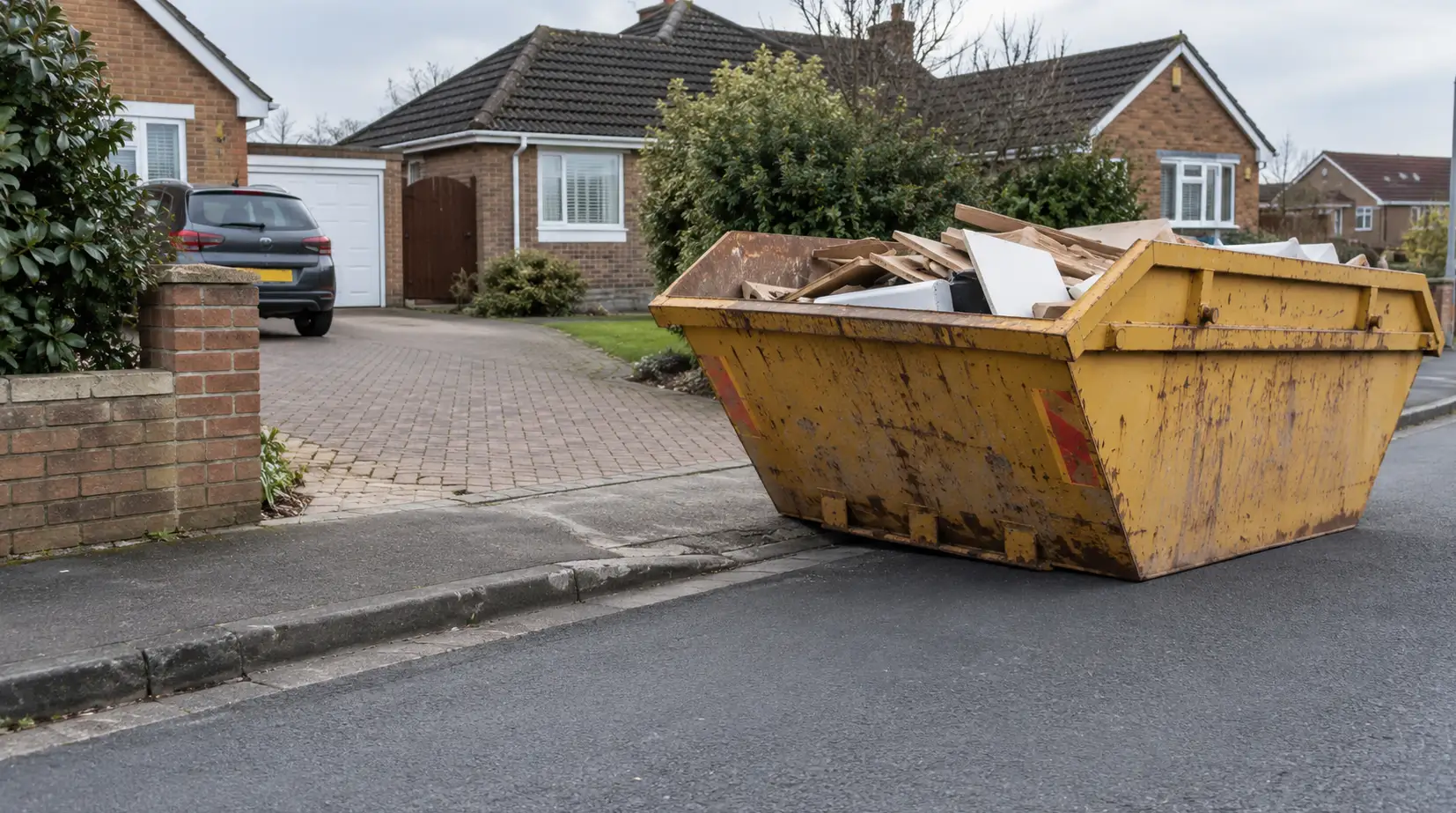
Bins, planters, skips, scaffolding and building materials raise the same general issue. A row of planters along the edge of a generous access route may interfere with nothing. Move those planters to a narrow entrance and they could make passage substantially more difficult. Temporary building work may cause a minor inconvenience, while a skip occupying the only usable vehicle route could prevent access altogether.
The repeated nature of an obstruction can matter too. A single delivery that briefly interrupts passage presents a different problem from a regular arrangement that leaves the route unusable for substantial periods. Photographs showing how the obstruction affects access, together with a record of its frequency and duration, can become important if the neighbour disputes the seriousness of the problem.
There is a distinction worth keeping in mind here. Somebody can park on land without having a legal right to do so even if nobody’s access is substantially obstructed. Equally, the owner of a driveway can interfere unlawfully with another property’s right of way by parking on land that unquestionably belongs to them.
Those are different legal questions. If your neighbour parks across the only route to your garage, your complaint may concern substantial interference with an easement. If somebody parks on your land without permission but leaves all established access rights unaffected, the issue may instead be unauthorised use of your property.
Confusing the two can lead to unnecessary arguments. The fact that somebody owns the ground does not necessarily justify blocking an easement, and the fact that somebody has a right to cross it does not automatically entitle them to leave a car standing there. Establishing what right has actually been infringed is usually more useful than arguing simply about who is allowed to park where.
What your right allows — and where it stops
When a neighbour begins restricting access, it is natural to concentrate on what they are doing wrong. But a right of way can only be obstructed in relation to the use it actually protects, and that may be narrower than the beneficiary assumes.
An express right limited to pedestrians does not automatically become a vehicle right because driving would now be convenient. Conversely, a deed that simply grants a “right of way” should not necessarily be treated as pedestrian-only merely because vehicles are not mentioned. The wording has to be interpreted in its original context, taking account of the route, the benefiting property and the circumstances in which the easement was created.
Historic use may help explain an ambiguous grant, although it cannot simply rewrite clear wording. A route that was plainly intended to serve a garage may raise different considerations from a narrow footpath leading to a garden. Where vehicular access is important to the property’s ordinary use, uncertainty about the wording is worth resolving properly rather than leaving it to neighbourly custom.
The right will also often extend beyond the registered owner personally. A residential access easement would be of limited practical value if ordinary visitors, deliveries and tradespeople could never use it. Depending on the grant, those attending the benefiting property may exercise the access as part of its normal occupation.
That does not necessarily authorise unlimited traffic or every new activity undertaken at the property. A right granted to serve a single dwelling may raise questions if the house is converted into several units or begins generating substantially different traffic through a commercial use. Not every increase in use exceeds the easement, but the right is not automatically capable of expanding without limit.
Parking is another area where assumptions cause trouble. A right to pass over land does not, by itself, confer an unrestricted right to park there. Parking can be the subject of a separate easement, and brief stopping may sometimes be incidental to exercising an access right — for example, while opening a gate or unloading goods — but using the route as a permanent parking space is a different activity.
Suppose your neighbour has a right to drive across your land to reach their garage and begins leaving a second car on the access overnight. Their easement may explain why they can cross the driveway without establishing why they can occupy it for parking. Equally, if you own the driveway but park in a position that prevents them exercising their established right, ownership alone does not necessarily justify the obstruction.
Changes to the benefiting property can complicate matters further. Someone with a right of way to a house might later build a replacement garage, undertake substantial renovations or increase the use of the access. Such changes do not automatically invalidate the easement or amount to excessive use, but the new arrangements must remain within the scope of the right.
An especially important distinction arises where the owner acquires additional land and tries to serve it using an existing easement. Imagine buying a plot behind your home and obtaining planning permission to build another house. It might seem obvious to use the existing driveway across your neighbour’s land, particularly if it already provides vehicle access to the rear of your property. But a right benefiting your original house does not automatically extend to additional land that was never granted the benefit.
Planning permission does not itself resolve that private property-rights question. If new dwellings, adjoining land or a substantially different use are intended to rely on an existing right of way, establishing whether the easement permits the proposed access before development begins can prevent a much more expensive dispute later.
The same underlying balance applies throughout. Your neighbour can generally continue using and managing their own land, but must respect the right attached to your property. You can exercise that right, but cannot automatically enlarge it to accommodate every new use you might wish to make of your land.
Understanding those limits is important because a neighbour who is genuinely obstructing a valid easement may nevertheless have a legitimate objection to some other use of the route. Treating every disagreement as part of the same dispute can make a practical resolution harder than it needs to be.
Before sending a solicitor’s letter, establish what has actually happened
The temptation when somebody blocks your access is to confront them immediately, particularly if you’re standing in the driveway unable to get your car out. There are situations where prompt action is necessary, but where the problem is not urgent, a little preparation can make the difference between a productive conversation and a dispute that becomes entrenched.
Start with the right itself. Obtain the relevant title register, plan and underlying deed, then identify precisely what it permits. If the right is claimed through implication or prescription, the investigation may need to extend to historic conveyances and evidence of long use. There is little advantage in threatening proceedings over a right whose existence or scope you have not yet established.
Then look at the obstruction as somebody unfamiliar with the disagreement would see it. A close-up photograph of a padlock proves that a lock exists, but may reveal nothing about whether a legal access has been prevented. A photograph showing the gate, the width available, the route to the garage and the practical difficulty of getting through provides a much clearer account.
If a neighbour regularly leaves a vehicle across the passage, record when it happens and how long access is affected. A permanent wall is easy to document; a van that blocks the driveway between seven and nine every weekday morning is a different evidential problem. Keeping a factual record of incidents can be considerably more useful than relying on competing recollections several months later.
Where historic use is disputed, preserve correspondence and other evidence that may explain how the arrangement developed. Old photographs, letters and information from previous occupants can matter, particularly if somebody is arguing that use was permitted rather than exercised as an independent right.
Once you understand the problem, it is generally worth speaking to the neighbour before assuming the worst about their intentions. A new owner may genuinely believe that owning the driveway entitles them to install a gate, without realising that the neighbouring property’s title grants vehicular access at all times. Equally, they may be resisting a use they believe goes beyond the original grant. An explanation grounded in the documents is more likely to be productive than a general accusation that they are breaking the law.
There is a substantial difference between saying “You’re not allowed to put a gate there” and explaining that your transfer grants vehicular access to the garage, but the new locking arrangements mean you cannot get through unless somebody next door is home. The second identifies the actual right, the practical interference and the change that needs addressing.
Sometimes the answer is as straightforward as providing a suitable key or remote, moving a bollard or agreeing that vehicles will not be left across the access. Where both households accept the underlying right, there may be room to resolve the inconvenience without either having to establish every possible legal argument about the land.
If discussion fails, a measured written explanation can help. Set out the right you rely upon, describe the obstruction and explain what practical remedy you are seeking. Keeping correspondence factual is worthwhile for reasons beyond politeness. Neighbour disputes can become relevant when either house is sold, and hostile letters written during an argument may be difficult to explain later.
Mediation can be particularly useful where both parties acknowledge that an access right exists but disagree about how gates, parking or everyday use should be managed. A workable compromise may protect the easement while allowing the landowner to address legitimate concerns about security or the use of their property.
Any arrangement intended to change or permanently regulate property rights may require formal documentation. A neighbourly understanding about keeping the route clear can solve an immediate problem, but a permanent relocation of an easement or another substantial change should not necessarily be left to an exchange of text messages. A solicitor can advise whether a deed or other formal step is appropriate, especially where the agreement is intended to bind future owners.
That future ownership issue is easily overlooked. A continuing dispute over access can complicate a property sale, prompting questions about rights of way, historic use, correspondence and unresolved disagreements. What begins as an argument over a gate can leave prospective buyers wondering whether they will be able to reach the garage or rear entrance without inheriting a legal problem.
Resolving the issue properly may therefore protect more than your immediate convenience.
When the obstruction is serious enough to require legal action
There is a difference between a gate that adds a minor inconvenience and one that effectively prevents you exercising an essential access right. Where a neighbour has locked the only practical legal route to your home, blocked vehicular access to an important part of the property or introduced a substantial permanent obstruction, prolonged informal correspondence may not be the appropriate response.
The seriousness depends on the right and the particular circumstances. Losing access to a garage may have significant consequences, while being unable to enter your home at all can create an even more immediate problem. In either situation, the effect of the obstruction and the strength of the legal right need to be considered together.
A solicitor experienced in property litigation can assess whether urgent formal action is justified. Where the facts warrant it, an application for interim court relief may be available to protect or restore access while the underlying dispute is determined. Such relief is not automatic simply because a change is inconvenient; the court will consider the right being asserted, the evidence, the seriousness of the interference and the applicable legal requirements.
Where substantial interference is established and cannot otherwise be resolved, the courts have several possible remedies. A declaration may establish the existence or scope of an easement, an injunction may require an obstruction to be removed or prevent further interference, and damages may be available in appropriate circumstances.
The remedy depends on the case. An injunction is not automatically granted for every technical infringement, and litigation carries cost and risk even where the legal argument appears strong. A dispute over a relatively minor restriction can become disproportionately expensive if the parties insist on pursuing every point rather than considering a workable resolution.
There is, however, a particular danger in assuming that because you have the stronger right, you can simply remove whatever is blocking it.
English law recognises limited circumstances in which interference with an easement may be addressed through self-help, sometimes referred to as abatement. That does not amount to general permission to cut locks, dismantle gates, uproot bollards or move somebody else’s property whenever you believe your right of way has been obstructed.
Whether self-help is available, and how far it may lawfully go, depends heavily on the circumstances. Getting it wrong can lead to allegations of trespass, criminal damage or liability for property that has been damaged or removed. It can also transform a potentially straightforward claim about access into a much more hostile dispute in which both parties accuse the other of wrongdoing.
If an obstruction is serious enough that you’re contemplating forcing it open or physically removing it, taking property-law advice first is generally the safer course. Acting in anger may feel satisfying for a moment, but it is a poor substitute for establishing exactly what the easement permits and pursuing an appropriate remedy.
The objective is to recover or protect the access your property is legally entitled to enjoy, not to create a second dispute that makes the first harder to resolve.
Scotland and Northern Ireland: similar problems, different legal rules
Although the practical disputes are familiar throughout the UK, the rules governing private access rights are not identical.
In Scotland, the equivalent right is generally known as a servitude, rather than an English easement. Servitudes can benefit one property over neighbouring land and may be recorded in the relevant title documentation. Registers of Scotland explains how ownership and servitude rights appear in title sheets, and its guidance on rights and title sheets provides a starting point for examining what has been established.
Scotland also has its own prescription rules. In appropriate circumstances, a positive servitude may be established through 20 years’ qualifying use that is open, peaceable and without judicial interruption. English rules concerning section 62 of the Law of Property Act 1925, Wheeldon v Burrows and the Prescription Act 1832 should not be applied to Scottish property.
A Scottish homeowner faced with a locked gate or blocked access will still need to establish the right benefiting their property, its scope and whether the neighbouring owner’s actions unlawfully interfere with it. Those questions must, however, be assessed under Scots property law rather than by assuming that the English easement rules apply unchanged.
Northern Ireland uses the terminology of easements and rights of way but operates its own land-registration framework. The official nidirect guidance on finding property and land information explains how relevant records can be obtained, while unregistered land may require investigation through the Registry of Deeds.
Historic easements can sometimes require more than a straightforward reading of a modern folio, particularly where older deeds, maps or arrangements are relevant. Northern Ireland also has its own legal framework for the creation, acquisition and enforcement of property rights, so an England-and-Wales Land Registry procedure or prescription rule should not automatically be treated as applicable.
For property owners in either jurisdiction, the practical starting point remains establishing what legal access exists and how the obstruction affects it. Where the position is disputed, a solicitor familiar with the relevant local property law can advise on the rights and remedies available.
The question that usually settles the argument
Rights-of-way disputes have a habit of becoming arguments about ownership, fairness and what has always happened. One neighbour points to the title plan and insists the land belongs to them. The other points to years of uninterrupted use and insists they are entitled to cross it. A gate appears, a car is parked in the wrong place or a passage becomes more difficult to negotiate, and both households become increasingly convinced that the other is being unreasonable.
The difficulty is that ownership does not automatically extinguish an easement, long use does not necessarily establish one, and the presence of an obstruction does not by itself prove substantial interference.
A landowner can often continue using and managing their property while respecting somebody else’s access rights. The beneficiary of a right of way can expect the access legally granted to their property to remain available, but cannot necessarily insist on additional parking, a wider route or access for land that never enjoyed the original benefit.
For a homeowner faced with a newly locked gate or recurring blockage, that distinction offers a practical way forward. Establish the legal right, identify precisely how it has been affected and seek a remedy proportionate to the problem. Where the facts are clear, a calm explanation may resolve an argument that began with a misunderstanding. Where essential access has genuinely been cut off, prompt specialist advice may be necessary.
None of this makes a confrontation with the neighbour particularly pleasant. But it is considerably better than discovering, after an expensive alteration or threatened court proceedings, that the right everybody was arguing about was never properly understood.
The clause your solicitor mentioned when you bought the house may have seemed like routine conveyancing paperwork. It becomes rather more important when somebody decides to put a gate across the route it protects.
Your neighbour’s ownership matters. So does your right of way. The answer lies in knowing where one ends and the other begins — and whether the obstruction has crossed that line.
This article provides general property information and does not constitute legal, conveyancing or other professional advice. Private rights of way depend on the relevant jurisdiction, title documents, any express or implied easements, historic use and the particular circumstances of an alleged obstruction. Where access has been materially restricted, a right is disputed, a gate has been locked or legal proceedings are being considered, seek advice from an appropriately qualified property solicitor. Do not physically remove or damage an obstruction without appropriate advice.

