

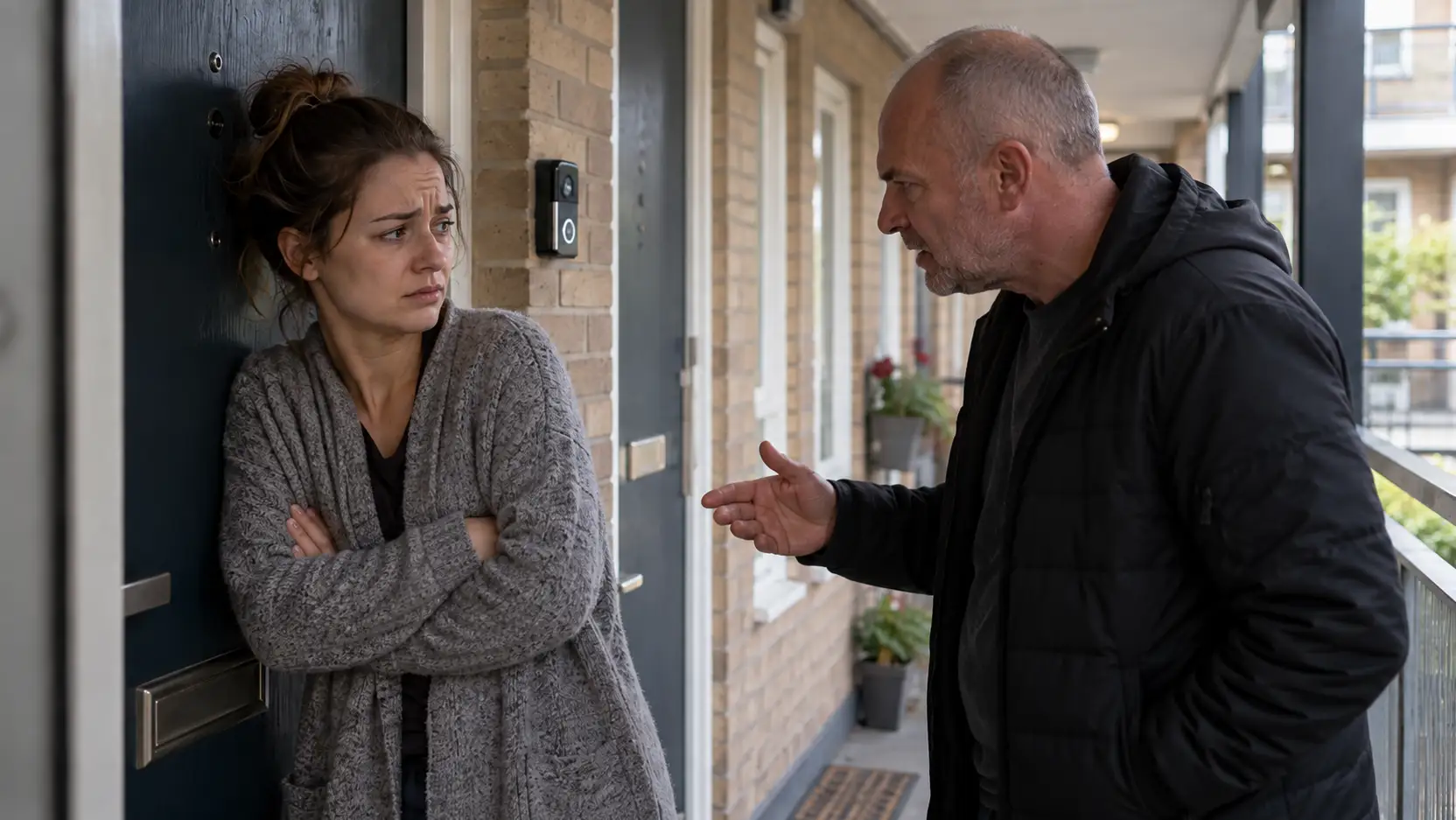
There are two mistakes that happen with roughly equal frequency once a neighbour relationship turns genuinely unpleasant, and they pull in opposite directions. One is treating every hostile, rude or unreasonable neighbour as if they’re committing a criminal offence — reaching for the word “harassment” after a single angry exchange, which usually leads nowhere and can make a genuinely resolvable situation harder to de-escalate. The other is the more damaging mistake: dismissing a pattern of targeted, repeated, deliberately intimidating behaviour as “just a neighbour dispute” because it doesn’t involve violence, and therefore not reporting it, not documenting it, and enduring far more than anyone should have to.
Telling these apart matters, and it’s worth being honest that the line isn’t always obvious in the moment. The law distinguishes between ordinary conflict, anti-social behaviour, harassment and stalking, but real situations don’t arrive neatly labelled. A dispute about a fence can gradually turn into repeated confrontations, unwanted messages or intimidation outside someone’s home, leaving the person affected uncertain whether they’re dealing with an unpleasant neighbour or something the police should investigate.
The useful question isn’t simply whether your neighbour is behaving badly. It’s whether the conduct has become a pattern directed at you, whether it causes alarm or distress, and whether the circumstances point towards an offence or another form of anti-social behaviour that an authority can address.
What actually separates the two
An isolated argument — even a genuinely nasty one, said in the heat of a specific disagreement — will not normally constitute harassment under the Protection from Harassment Act 1997 in England and Wales. The legislation prohibits a course of conduct amounting to harassment where the person responsible knows, or ought reasonably to know, that their behaviour amounts to harassment. For conduct directed at one person, a course of conduct generally requires behaviour on at least two occasions.
That doesn’t mean two unpleasant encounters automatically become a criminal offence. The nature of what happened, its context and whether the behaviour objectively amounts to harassment still matter. A neighbour making an angry remark on Monday and being rude again on Friday hasn’t necessarily crossed the legal threshold merely because the incidents can be counted.
Nor does the law require somebody to announce that they intend to harass you. The question includes what a reasonable person, with the same information, would recognise about the effect of the conduct. Repeated behaviour can therefore become harassment even where the person responsible claims they were merely expressing their displeasure about an ongoing dispute.
The distinction becomes clearer when the behaviour is directed at somebody rather than simply arising from an ordinary disagreement. A neighbour who argues about parking whenever the subject comes up may be extremely difficult to live beside without necessarily committing harassment. A neighbour who begins repeatedly waiting beside your car, following you when you leave home, sending abusive messages or deliberately confronting you after you’ve tried to avoid further contact presents a different picture.
Police guidance on stalking and harassment identifies repeated abusive or threatening communications, unwanted contact and ongoing targeted behaviour as potential harassment. Stalking can involve following, watching, spying on or persistently approaching somebody, including conduct that causes them to change their normal activities.
It’s important not to reduce this to a question of whether somebody has actually been physically attacked. Repeatedly watching a person’s movements, appearing wherever they go or sending intimidating messages can be serious without any physical contact. Equally, not every occasion on which a neighbour looks out of their window or happens to use the same street is evidence of stalking. The pattern, context and effect are what require proper assessment.
There’s another distinction that mustn’t get lost in the discussion about repetition: a single serious incident can still be a crime even if it isn’t harassment under the course-of-conduct test. An assault, a sufficiently serious threat or criminal damage doesn’t need to happen twice before it can be reported. You don’t have to wait for a pattern to develop when something independently criminal has already happened.
The legal routes also differ across the UK. In Scotland, Section 8 of the 1997 Act provides a civil remedy concerning harassment, while a specific criminal stalking offence exists under the Criminal Justice and Licensing (Scotland) Act 2010. Police Scotland’s guidance recognises that stalking and harassment may arise after disagreements, including arguments between neighbours, and explains how repeated behaviour may be reported.
Northern Ireland has its own Protection from Harassment (Northern Ireland) Order 1997, together with separate stalking offences and protective measures introduced under the Protection from Stalking Act (Northern Ireland) 2022. The Police Service of Northern Ireland’s guidance explains the distinction and the available reporting and protection routes.
The precise offences and remedies aren’t identical, but the practical principle travels across all four nations: look at the conduct itself, not merely the argument that started it.
The behaviour beneath a deteriorating relationship
Long-running neighbour disputes rarely start as harassment. They usually start with something ordinary — a boundary disagreement, a parking argument, a complaint about noise — and escalate through a series of increasingly hostile exchanges.
That history can become a distraction once the behaviour itself changes. If two neighbours disagree about where a fence should sit, the original issue is a property dispute. If one then begins repeatedly confronting the other outside their home, leaving threatening messages or damaging their property, the fact that everything started with a fence doesn’t reduce the later behaviour to a boundary question.
This matters particularly when somebody has been making complaints for months. It’s easy to become so focused on proving who was right about the original problem that every new incident gets described as another development in the same argument. The police or a council’s anti-social behaviour team may be much more interested in what has actually happened since: whether there have been threats, how frequently contact occurs, whether the behaviour appears targeted and how it is affecting the person living next door.
There’s also a difference between two neighbours who are repeatedly arguing with each other and one person who is trying to avoid contact but continues to be pursued or intimidated. That doesn’t automatically determine the legal position, but it’s a relevant part of understanding the circumstances. The fact that a relationship was once mutually hostile doesn’t make every later incident mutual, nor does it prevent a pattern of harassment from developing.
Property Front Page covers the underlying causes of neighbour disputes — noise, boundaries, parking, rubbish and other everyday problems — in separate articles. This isn’t about deciding whose original complaint was justified. It’s about recognising when the way somebody behaves has become a problem in its own right, and why continuing to treat it solely as a disagreement about property may no longer be appropriate.
What to do while it’s happening
Where there’s an immediate threat of violence, somebody is attempting to enter your home, an assault is taking place or you believe you or somebody else is in immediate danger, call 999. Personal safety comes before evidence gathering, conversations with the neighbour or any of the longer-term procedures described here.
Outside an emergency, evidence is one of the most useful things you can preserve, because harassment and stalking cases often depend on establishing a pattern. Individual incidents may look relatively minor when considered separately. A neighbour standing outside your house once might mean very little; repeatedly waiting there at times that coincide with your movements, alongside unwanted messages or threatening confrontations, could present a substantially different picture.
A useful record doesn’t need to read like a solicitor’s witness statement. It needs to be accurate, consistent and made while events are still reasonably fresh. Worth keeping are:
- Dates, times and a factual account of each incident. Record what happened, where it happened and who was involved. Where particular words matter, note them as accurately as possible rather than substituting an interpretation of what you think the neighbour intended.
- Messages and other communications. Keep texts, emails, letters, notes, social-media messages and voicemails rather than deleting them, however unpleasant they may be to revisit.
- Evidence of physical incidents. Photograph damage, graffiti or objects left at your property, and preserve relevant footage from an existing doorbell camera or CCTV system before recordings are overwritten.
- Witness information. Record who actually saw or heard an incident and what they observed. Avoid assuming that somebody can corroborate an event simply because they were nearby.
- Reference numbers and previous reports. Keep police incident numbers, council complaint references and correspondence with landlords or housing providers. These help agencies identify a continuing pattern instead of treating every report as unrelated.
- The effect on ordinary life. Note whether you’ve stopped using part of your garden, changed how you enter your home, avoided parking in your usual space, altered your routine or become afraid of particular encounters. The impact of the behaviour is relevant alongside the incidents themselves.
That last point can be particularly important. A neighbour dispute isn’t necessarily becoming less serious simply because the shouting has stopped. If the shouting has been replaced by repeated unwanted approaches, following or conduct that makes somebody afraid to leave their home, the problem may have changed rather than disappeared.
Don’t delay making a police report because you haven’t assembled a complete evidence file. Police guidance expressly recognises that incidents can be reported before the victim has collected recordings, messages or witness statements. Evidence can help an investigation, but gathering it isn’t a condition of asking for help.
There’s also a practical limit to how far evidence gathering should go. Preserve recordings from cameras already installed for legitimate security purposes, but don’t begin following your neighbour, trespassing to obtain photographs, provoking confrontations or setting up intrusive surveillance simply to strengthen a case. Those actions may escalate the situation and create separate legal complications.
The same caution applies to communication. A calm conversation or independent mediation can be useful while the relationship remains a disagreement that both parties can safely discuss. Once there are serious threats, stalking-like behaviour or repeated deliberate intimidation, mediation may be inappropriate. Nobody should feel obliged to confront somebody they fear before reporting what has happened.
If you’re uncertain about the level of risk, explaining the pattern to the police and asking what protective measures or specialist support may be appropriate is more useful than attempting to make the legal classification yourself.
Escalation routes, and what each one actually does
For conduct that may be criminal — harassment, stalking, threats, assault, criminal damage or other offences — the police are an appropriate route. Where there’s no immediate emergency, incidents can generally be reported by calling 101, using the relevant police force’s online reporting service or attending a police station.
It’s worth reporting serious conduct even if you’re unsure which offence might apply. Someone experiencing repeated unwanted contact shouldn’t need to determine whether it’s technically harassment or stalking before asking for an investigation. Equally, a serious threat or criminal act may warrant a report before any pattern has emerged.
When making a report, explain whether there have been previous incidents and provide the reference numbers if you have them. Ask how any new information should be linked to the existing reports and what to do if the behaviour escalates. If you’re concerned about your immediate safety or the possibility of retaliation, make that clear rather than assuming officers will infer it from a description of the neighbour dispute.
Persistent anti-social behaviour can also involve the local authority and, where relevant, a housing provider. In England and Wales, the Anti-social Behaviour, Crime and Policing Act 2014 provides several powers that councils, police and other authorised organisations can use depending on the circumstances. The Home Office’s guidance on anti-social behaviour powers explains the available framework.
One example is a Community Protection Notice, which can be issued where conduct is persistent or continuing, unreasonable and has a detrimental effect on the quality of life of people in the locality. A written warning is required before a notice can be issued, and the person responsible must have had sufficient opportunity to address the behaviour.
That doesn’t make a Community Protection Notice a general neighbour-harassment order. It’s a particular legal power with particular conditions, and not every hostile exchange or criminal allegation is appropriately dealt with through it. Depending on the circumstances, the police may need to investigate a possible offence while the council considers a separate anti-social behaviour response.
Housing arrangements can provide another route. Where a neighbour is a social-housing tenant, the landlord may be able to investigate conduct that breaches tenancy obligations and consider proportionate tenancy-management or legal action. Private landlords and managing agents may also have a role where the behaviour involves a tenancy or managed building, although their powers depend on the contractual and legal circumstances. Reporting harassment to a landlord shouldn’t replace contacting the police where criminal conduct may be involved.
There may also be civil remedies. In England and Wales, Section 3 of the Protection from Harassment Act 1997 allows a person affected by harassment to seek an injunction, and damages may be available in appropriate circumstances. An injunction can restrict specified conduct, and breaching one can have serious consequences. This isn’t an automatic or risk-free option — evidence, cost, urgency and the precise legal grounds all matter — but a solicitor may be able to advise where serious repeated conduct continues despite other interventions.
These routes aren’t mutually exclusive. A person might report threatening behaviour to the police, notify a housing association about repeated anti-social behaviour and seek legal advice about an injunction. What matters is understanding what each organisation has the power to do, rather than expecting one department to resolve every aspect of the situation.
There’s another mechanism that’s particularly useful when the problem is persistent and previous reports appear to have achieved very little: the Anti-social Behaviour Case Review, still widely known by its former name, the Community Trigger.
In England and Wales, this allows people who have repeatedly reported anti-social behaviour to request a formal review of how the relevant agencies have dealt with their case. The current Government guidance on the Anti-social Behaviour Case Review explains that the qualifying threshold is set locally but must not be higher than three complaints. The statutory framework concerns qualifying reports within the relevant period, generally the preceding six months, with detailed local rules determining eligibility.
That is not the same as saying that three phone calls automatically produce enforcement action. Reports must meet the relevant criteria, and local arrangements may set a lower threshold or take account of the effectiveness of previous responses and the harm being caused.
Where the threshold is met, the relevant agencies must undertake a review. This can bring together the council, police, relevant health services and social-housing providers to examine what has happened, how earlier reports were handled and whether further coordinated action is appropriate.
For somebody who has reported repeated incidents over several months, that can be a genuinely important distinction. Instead of another complaint being considered in isolation, the case is examined collectively. Agencies can identify information that hasn’t been shared, reconsider the adequacy of previous responses and agree what further action may be justified.
There are limits, however. A case review isn’t a new criminal investigation, a guaranteed injunction or a promise that the neighbour will be sanctioned. It reviews the response to the problem and whether more can reasonably be done. But where repeated complaints have led nowhere, it’s a formal route that many residents never realise exists.
If you think you may qualify, check your council’s published Anti-social Behaviour Case Review procedure and provide the dates and reference numbers of previous reports. If the threshold is met, ask how the review will be conducted, how your circumstances and safety concerns will be considered, and how the outcome will be communicated.
The Community Trigger mechanism described here applies to England and Wales. Scotland and Northern Ireland have their own anti-social behaviour arrangements and reporting procedures, so residents there should not assume this particular review process operates in the same way.
The judgement this article can’t make for you
No article can tell you, from the outside, whether what you’re experiencing meets a particular criminal or civil legal threshold. That depends on the incidents, their context, the available evidence and an assessment by the appropriate authority or court.
What this piece can offer is the distinction that matters. An isolated unpleasant argument is not the same as a repeated course of unwanted conduct. Two incidents don’t automatically constitute harassment merely because they satisfy the minimum number of occasions required by the legislation. And a pattern involving following, threats, intimidating approaches or persistent unwanted contact doesn’t become harmless simply because no physical violence has occurred.
It’s equally important not to let uncertainty about the correct legal term prevent you reporting something serious. You aren’t expected to decide whether a neighbour has committed harassment, stalking, a public-order offence or some other offence before contacting the police. Describe the conduct, explain how it has affected you and let the relevant authority assess which legal provisions may apply.
For a dispute that remains capable of being resolved safely, calm communication or mediation may still be worthwhile. For behaviour that has become persistently targeted or intimidating, keeping distance, preserving evidence and seeking help may be the more appropriate response. The correct approach depends on what is happening now, not simply how the relationship began.
And if you’ve already reported repeated anti-social behaviour without a meaningful resolution, don’t overlook the possibility of asking for a formal case review. It doesn’t guarantee the outcome you want, but it provides a way for relevant agencies to examine the case together rather than allowing the same incidents to be repeatedly considered in isolation.
The original disagreement may still need solving eventually. But once a neighbour’s behaviour becomes threatening, persistently targeted or genuinely intimidating, what started the dispute is no longer the only question that matters.
Important: This article provides general information about neighbour harassment, stalking and anti-social behaviour, not legal or other professional advice for individual circumstances. Relevant offences, civil remedies and enforcement procedures differ across England and Wales, Scotland and Northern Ireland. If you or somebody else is in immediate danger, call 999. If the situation involves repeated threats, stalking or other potentially criminal conduct, seek advice from the police or an appropriately qualified legal professional.

