

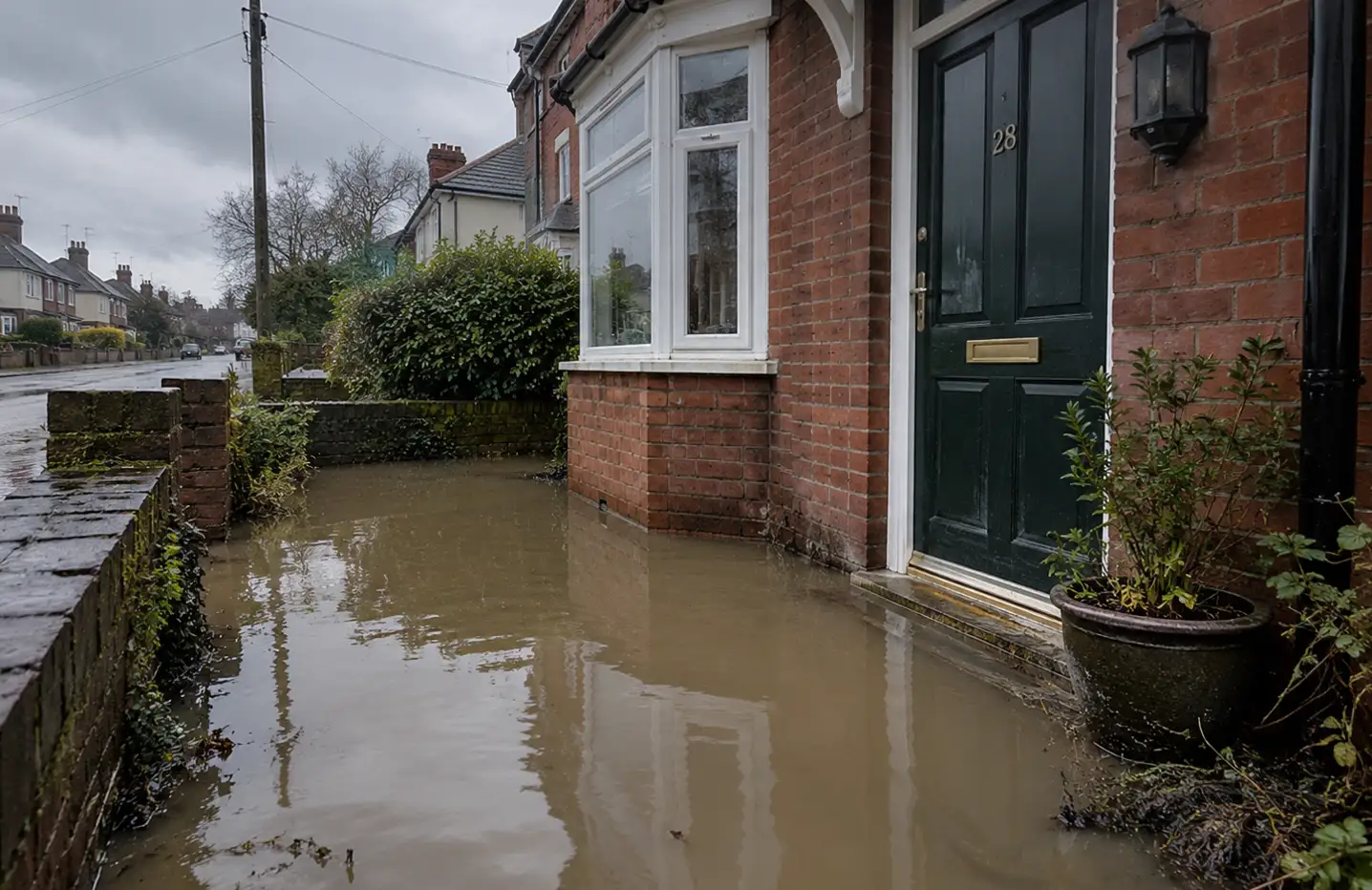
Water is in your home, and the last thing you need right now is a lecture on the different types of flooding. What you need is a clear sequence of what to actually do, starting with the most urgent thing first.
This article is written in that order.
If anybody is in immediate danger, call 999. Possessions, furniture and even the building itself come after getting people and pets somewhere safe.
Is it safe to go in at all?
If you’ve been evacuated, or emergency services have told you to leave, don’t go back simply because the water appears to be falling. Wait until you’ve been told it’s safe to return.
Floodwater can hide missing manhole covers, broken glass, displaced objects, uneven ground and other hazards that are impossible to see through dirty water. Fast-moving water creates another risk entirely, while significant flooding can affect walls, floors and foundations in ways that aren’t immediately obvious from outside.
The government’s current guidance on what to do after a flood starts with exactly this point: establish that it’s safe before returning.
If you’re already inside and water is continuing to rise, don’t keep moving downstairs to save belongings. Move people and pets to a safe higher level with a viable escape route and follow emergency-service advice.
And don’t walk or drive through floodwater simply because you think you know the road underneath it. Floodwater can be deeper and faster than it looks, and covers, kerbs and road surfaces may no longer be where you expect them to be.
Utilities, before anything else
If flooding is approaching but has not yet reached the relevant equipment, turn off gas, electricity and water supplies if you know how and it is safe to do so.
Once water has reached electrical equipment, however, the advice changes. Don’t stand in floodwater to reach the consumer unit, don’t touch wet switches or sockets, and don’t assume turning something off is safe merely because you can reach it.
Electrical Safety First’s flood guidance advises switching the electricity off only where it is safe to do so and having flood-affected wiring, appliances and electrical equipment professionally assessed before they’re used again.
If there is water inside or around the consumer unit, exposed wiring, arcing, overheating or any other sign of electrical damage, leave it alone.
Gas appliances and supplies affected by floodwater also need professional checking before they’re returned to service. If you can smell gas, don’t operate electrical switches or use flames. In Great Britain the National Gas Emergency Service number is 0800 111 999; in Northern Ireland it is 0800 002 001.
The same principle applies after the water recedes: dry-looking does not mean electrically safe. Don’t reconnect flooded appliances or restore supplies simply because the room no longer contains standing water.
If you’re using a petrol or diesel generator for pumps or drying equipment, it must stay outside, well away from doors, windows and other openings. Never run one in a house, garage, cellar or other enclosed or partly enclosed space. Carbon monoxide can kill without warning. A working carbon-monoxide alarm is an additional safeguard, not a way of making indoor generator use safe.
Stop further damage where you safely can
People, pets and vehicles come first. Once they’re safe, there may still be things you can do without putting yourself at risk.
If flooding is imminent rather than already severe, move sentimental items, documents, medicines, electronics and other portable valuables upstairs or onto higher shelves. Large pieces of furniture are rarely worth injuring yourself to save.
Putting plugs into sinks and baths and weighing them down can help where floodwater is threatening to back up through drainage. Where proper property-level flood protection is already available — flood doors, barriers or air-brick covers — use it according to the manufacturer’s instructions if there is still time to do so safely.
One particularly important point is easy to miss once there’s a substantial amount of water inside: don’t automatically start pumping it out as fast as possible while the water outside is still higher.
Water outside the building exerts pressure against walls and floors. Removing the internal water too quickly while external flood levels remain high can increase the difference in pressure across the structure and potentially worsen damage, particularly to basements, cellars and walls below ground level.
Environment Agency guidance recommends beginning substantial pumping when the water outside has fallen below the level inside. Where water in or around the property is around a metre deep or more, structural advice is sensible before simply pumping ahead.
Wherever the water is pumped, it also has to go somewhere lawful and safe — not simply into a neighbouring garden, back onto a flooded road or into a sewer or watercourse without checking whether permission is required.
Photograph before you clear anything away
This matters more than it may feel like it does in the moment.
Before major clean-up or disposal begins, photograph or video each affected room, the visible flood-water line, damaged finishes, furniture and belongings. Photograph the exterior too if you can safely identify where the water entered.
Wide photographs establish the extent of the loss; closer photographs record individual items. Where labels, model numbers or serial numbers survive on higher-value appliances or equipment, photograph those as well.
The Association of British Insurers’ flood guidance recommends contacting the insurer promptly and discussing damaged items before disposing of them. Insurers won’t normally expect you to retain something that presents a genuine health hazard simply so it can be inspected; photographs can often provide the necessary evidence.
Don’t put yourself at risk trying to create the perfect claim record. Safety comes first, and no insurer needs a photograph badly enough to justify going back into an unsafe room.
Keep receipts from this point onwards too. Emergency accommodation, essential purchases and temporary work undertaken to prevent further damage may become relevant to the claim, depending on your policy.
Contact your insurer early
If you have buildings or contents insurance, contact the insurer’s emergency claims service as soon as reasonably possible.
If buildings and contents cover are with different companies, you may need to notify both.
The insurer may appoint a loss adjuster, arrange specialist cleaning or drying, discuss alternative accommodation and explain what emergency work you can authorise immediately. For a large claim, that early conversation can prevent a lot of uncertainty later about what was approved and what evidence was needed.
Temporary measures required to prevent additional damage shouldn’t usually be delayed merely for the sake of paperwork, but where circumstances allow, speak to the insurer before commissioning significant work and keep invoices and receipts for anything you have to arrange yourself.
Don’t assume every damaged item automatically belongs in a skip. Some furniture, finishes and possessions may be capable of restoration, while obviously contaminated or hazardous material may need to go quickly. Let the insurer or loss adjuster help make that distinction where practical.
If the property isn’t habitable, buildings or contents policies commonly include some level of alternative-accommodation cover, subject to the policy wording and limits. Ask about that early rather than paying indefinitely for somewhere else to stay and only later discovering what the insurer expected.
The detail of flood cover, previous flooding and Flood Re belongs in our separate Property Front Page insurance coverage. For now, the important thing is getting the claim open and understanding who’s coordinating the recovery.
If you’re renting
Tell your landlord or letting agent immediately and put the report in writing even if you’ve already telephoned.
Repair obligations differ in detail across England, Wales, Scotland and Northern Ireland, but structural repairs and restoring the landlord’s building and services will ordinarily sit with the landlord rather than the tenant where the tenant hasn’t caused the flooding.
Your own furniture, clothing and other possessions are a separate issue. A landlord’s buildings insurance doesn’t normally insure a tenant’s belongings, which is where the tenant’s own contents policy becomes important.
Temporary accommodation is more complicated than simply saying the landlord must always provide somewhere else to live. The answer depends on where in the UK you live, the type of tenancy, the tenancy agreement, the landlord’s insurance and whether the local authority owes you housing assistance.
If the property is genuinely unsafe or impossible to occupy and you have nowhere suitable to go, contact the local housing authority as well as your landlord. Don’t assume you have to remain in dangerous accommodation while arguments about responsibility are resolved.
A dedicated Property Front Page article on tenants’ rights after serious property damage should deal with those questions properly rather than compressing four housing-law systems into this emergency guide.
Treat external floodwater as potentially contaminated
It’s tempting to distinguish “clean rainwater” from dirty flooding, but once water has travelled across roads, gardens, fields, drains or sewer systems, you may have no reliable way of knowing what it contains.
External floodwater should therefore be treated as potentially contaminated.
The UK Health Security Agency’s flood clean-up guidance recommends waterproof gloves, rubber boots and protective clothing during cleaning, together with eye protection where splashing is likely. Cuts should be covered, and hands washed thoroughly after contact.
Where there is obvious sewage, chemical contamination or another unusual pollution source, the case for specialist advice or professional clean-up becomes stronger still.
Don’t eat food that’s been in contact with floodwater. Wooden chopping boards and wooden utensils contaminated by floodwater should be discarded rather than attempting to disinfect them.
Medicines affected by floodwater shouldn’t simply be dried and reused; ask a pharmacist about safe disposal and replacement where necessary.
And don’t overlook drinking water. Mains tap water is normally safe unless the water company says otherwise, but if its colour, smell or taste changes after flooding, stop using it and contact the water supplier for advice.
Food in the fridge and freezer can become a separate problem
A prolonged power cut creates a food-safety issue even where the floodwater never reached the kitchen worktop.
Current government flood guidance advises disposing of food from a refrigerator where the electricity has been off for more than four hours, and food from a freezer where it has been without power for more than 24 hours.
Anything directly touched by floodwater should be treated separately from that timing rule and discarded where contamination can’t safely be removed.
This is easy to overlook because the visible building damage naturally takes all the attention, but a fridge full of apparently normal food after a long loss of electricity can create another avoidable health problem.
Looking dry is not the same as being dry
This is one of the most important lessons in the whole recovery process.
A room can lose its standing water, feel dry underfoot and look almost normal while masonry, floor voids, plaster, insulation and structural timber are still carrying substantial moisture.
Drying a flooded building isn’t simply a matter of running a domestic dehumidifier until the windows stop steaming up.
Professional drying may involve stripping particular finishes, ventilation, dehumidification, air movement and repeated moisture measurement. Different materials dry at different rates, and concealed voids can remain wet long after the surfaces appear normal.
The process can take weeks and, after a substantial flood, sometimes months. The ABI’s current flood guidance recognises that major flood-damaged homes can require extended drying and reinstatement before residents can safely return.
That time isn’t dead time. Drying too little and rebuilding too early can trap moisture behind new plaster, flooring, kitchens or decoration, creating mould and deterioration that only become apparent after the claim appears to have been finished.
A moisture reading taken once is also not magical proof that a whole building is dry. What matters is the drying professional or surveyor establishing that the relevant materials have reached an appropriate condition for the proposed reinstatement, using measurements taken in the right places and, where necessary, over time.
Temporary measures versus the real repair
There is an important difference between making the property safe and preventing further loss and permanently rebuilding it.
Temporary boarding, emergency roof repairs, removal of dangerous contaminated materials or other work necessary to stop further damage may need to happen quickly.
Permanent reinstatement deserves more patience.
Before new plaster, flooring, joinery or decoration goes back in, the source of flooding needs to be understood, damaged materials assessed properly and the building allowed to dry sufficiently. Where insurers are involved, the repair specification should normally be agreed with them or their loss adjuster before substantial reinstatement begins.
This is also the point at which simply putting the house back exactly as it was before may not always be the smartest answer.
Don’t miss the chance to make the house more resilient next time
Once the immediate crisis has passed and the reinstatement plan is being discussed, ask the insurer whether the policy includes Build Back Better or another form of property flood-resilience cover.
Flood Re’s Build Back Better scheme allows participating insurers to include additional resilience measures as part of an eligible flood claim. Depending on the insurer and policy, support can be available for measures costing up to £10,000, although the amount and eligibility vary and the full figure isn’t automatic.
The options can include things such as flood-resistant doors, self-closing air bricks, raising electrical equipment, non-return valves, resilient flooring and other measures intended either to keep more water out or make the next recovery much quicker.
This isn’t something to bolt on after all the repair decisions have been made. Ask about it while the reinstatement specification is being developed, because some of the most effective resilience changes are easiest and cheapest to make while the property is already stripped out.
For Property Front Page, this is also where the flood moves from being simply a disaster to being a property decision: if thousands of pounds are already being spent rebuilding the ground floor, there may be a rare opportunity to rebuild it in a way that reduces the cost and upheaval of the next event.
What the road back to normal actually looks like
It’s worth having a realistic sense of what happens next without assuming that every flooded home faces the same months-long ordeal.
A relatively shallow, short-lived incursion into one room can be dealt with very differently from deep, contaminated flooding affecting an entire ground floor.
For a substantial insured flood, the journey normally moves through several broad phases. First comes making the property safe and assessing the loss. After that, materials that can’t reasonably be cleaned or retained are removed — selectively, not simply stripping everything because it got wet. Cleaning and disinfection follow where contamination requires them, before the building moves into its drying phase.
Drying is then monitored rather than guessed. Only when the structure is ready does permanent reconstruction make sense: plastering, flooring, joinery, kitchens, electrical reinstatement, decoration and the other work required to turn a damaged building back into a home.
During that process, the loss adjuster, insurer, drying company, contractors and homeowner can sometimes appear to be moving at frustratingly different speeds. Some delays are avoidable; others are simply the reality of allowing a wet building to dry rather than covering the problem up.
ABI figures indicate that after major floods many displaced households can be out of their homes for six to nine months, although individual claims range from weeks to a year or more depending on severity. That shouldn’t be taken as a prediction for your house. It is simply a reminder that a serious flood is often a recovery process rather than a repair appointment.
And that recovery isn’t purely physical. UKHSA notes that anxiety, poor sleep and exhaustion are common after flooding, and that much of the longer-term health burden associated with flooding is psychological rather than simply infectious disease. If you’re finding the process harder than expected, that isn’t something to ignore while concentrating exclusively on plaster and insurance paperwork.
A properly recovered home isn’t the one that looks normal again first. It’s the one that’s safe, genuinely dry, properly reinstated and, where practical, better prepared for what might happen next.
This article provides general property information and does not replace emergency-service, insurer, utility-company, public-health or professional advice for your particular flood. Flood-response arrangements and housing law differ across the UK. Never enter or remain in a flooded property where there is immediate danger, never restore flood-affected gas or electricity without appropriate safety checks, and obtain structural advice where substantial flooding may have affected the building.

