

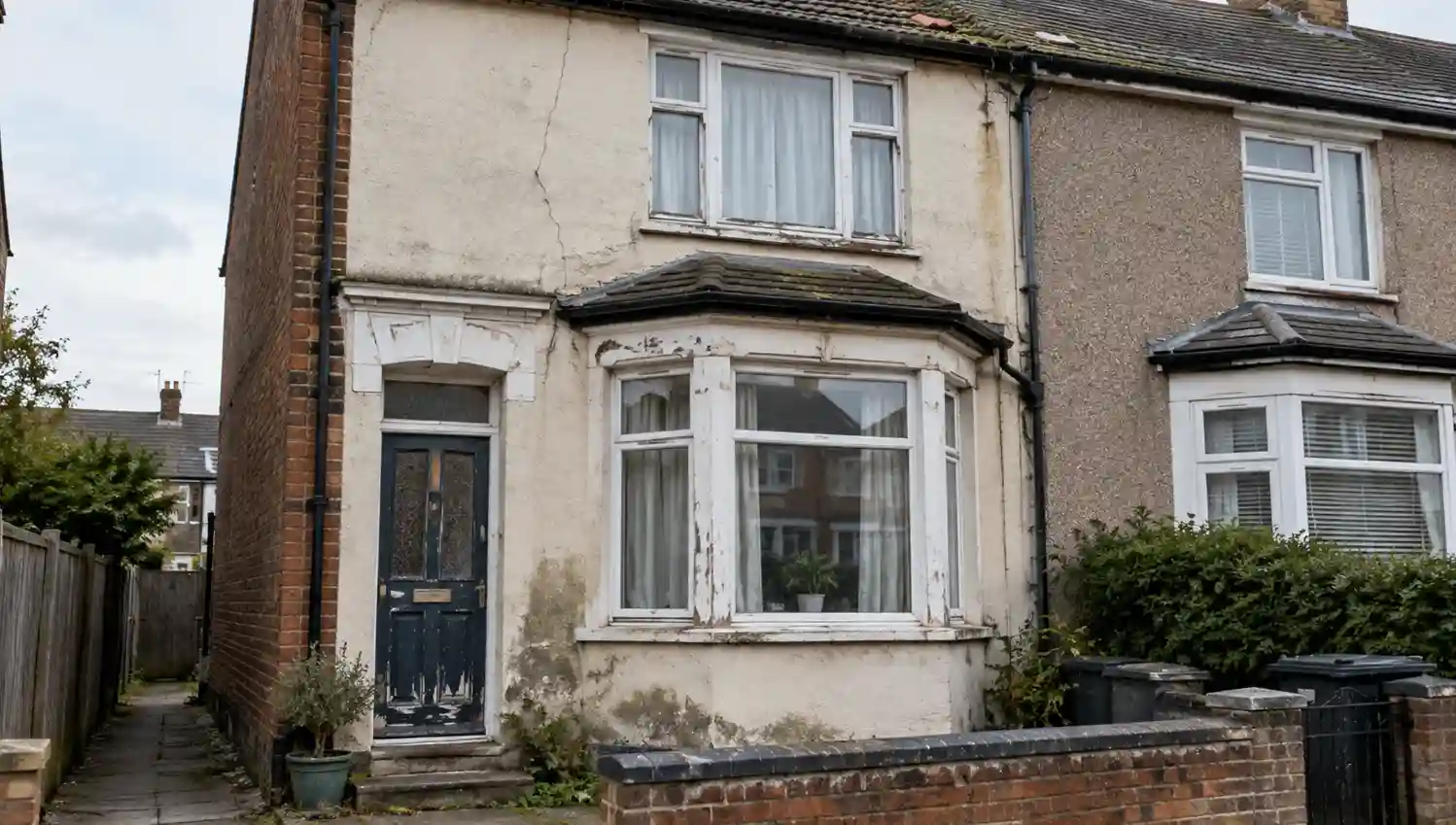
A rented home can be dated, a bit tired, and genuinely inconvenient to live in without breaking any law at all. Ugly carpet, an old kitchen, thin walls — none of it is illegal. What the law does insist on is something narrower and more fundamental: that a home doesn’t present a genuine risk to health or safety, and that it’s actually habitable. Understanding the difference between “not to my taste” and “not legally fit” is the whole point of this article.
The tool councils actually use: HHSRS
The Housing Health and Safety Rating System — HHSRS — is the framework local authorities in England use to assess whether a property poses a health or safety risk. It’s important to understand what this actually is: not a simple checklist a property either passes or fails, but a risk-assessment tool. An inspector considers a specific deficiency — say, a broken extractor fan in a windowless bathroom — and assesses both the likelihood of harm resulting from it and how serious that harm could realistically be, producing a score that reflects genuine risk rather than a box-ticking exercise.
HHSRS was substantially revised in 2026: the Housing Health and Safety Rating System (England) (Amendment) Regulations 2026 came into force on 23 June 2026, consolidating what had been 29 separate assessed hazards down to 21, and replacing the old ten-band A-to-J system with three clearer risk bands. The government’s updated HHSRS tenant guidance explains the revised system. The changes were intended to make an already complex framework easier for landlords, tenants and councils to understand and apply, rather than fundamentally changing the underlying principle that homes should be free from serious health and safety hazards.
A hazard scoring 1,000 or more is a Category 1, or high-risk, hazard. Hazards scoring below that threshold are Category 2 and are divided into moderate-risk and low-risk bands. The assessment looks at the likelihood of a harmful occurrence over a 12-month period and how serious the resulting harm could be — it isn’t simply a judgement that somebody is likely to need medical treatment within the next year. Where a council identifies a Category 1 hazard, it has a legal duty to take appropriate enforcement action; for Category 2 hazards, it has discretion over whether enforcement is appropriate.
Common hazards assessed under the system include excess cold, damp and mould, fire and explosions, electrical hazards, falls, and security risks — the kind of issues that genuinely affect whether a home is safe to live in, as opposed to simply old-fashioned.
Fitness for human habitation, in plain terms
Separately from HHSRS, most residential tenancies in England to which the Homes (Fitness for Human Habitation) Act 2018 applies carry an implied legal term that the property is fit for human habitation both when the tenancy begins and throughout its length. This isn’t a vague aspiration; the law sets out factors a court will weigh in deciding whether a property meets it, including general repair and structural stability, freedom from damp, adequate natural lighting and ventilation, a functioning water supply and drainage, sanitary facilities, and reasonable facilities for preparing and cooking food, alongside housing hazards serious enough to make the property unsuitable for occupation. The government’s fitness-for-human-habitation guidance for tenants explains how the right works.
The legal test isn’t whether the property is perfect — it’s whether it’s “so far defective” in one or more of these respects that it’s “not reasonably suitable for occupation” in that condition. A single scuffed wall doesn’t come close to this threshold. A property with no functioning water supply, or with structural instability posing a real risk of collapse, clearly does. Most disputes sit somewhere in between, and are judged on the specific facts, sometimes with expert evidence, rather than against a fixed universal line.
One point worth understanding clearly: this fitness duty and the separate Section 11 repair duty (covered in our companion article on repair responsibility) don’t always overlap perfectly. Damp caused by a leaking roof is straightforwardly a repair issue. Damp caused by condensation — where there’s no obvious “disrepair” as such, just a building that’s cold, poorly ventilated, or both — can still breach the fitness standard even though it might not clearly breach Section 11. This nuance matters enough that we’ve given it dedicated treatment in our companion article on damp and mould responsibility.
What councils can actually do, and what they can’t
Local authorities have real inspection and enforcement powers over private rented housing — they can inspect a property, formally assess it against HHSRS, and where a serious hazard is confirmed, use measures including improvement notices, prohibition orders and, in appropriate cases, emergency action. Councils must act where a Category 1 hazard is identified and have discretion over Category 2 hazards.
Since June 2026, councils also have a power in qualifying cases to impose a financial penalty where a landlord could reasonably have removed a Category 1 hazard but failed to do so. The government’s HHSRS enforcement guidance sets out those powers in more detail.
What a council generally won’t do is act as a general referee for every tenant complaint about a property’s condition — their role is targeted at genuine health and safety hazards assessed against the HHSRS framework, not general dissatisfaction with a property’s age, layout or décor. A council receiving a complaint about worn carpet is in a genuinely different position from one receiving a complaint about black mould covering a bedroom ceiling.
If you think your home crosses the line
The council route and the fitness-for-human-habitation route are related, but they aren’t the same thing. If a serious problem develops, report it to your landlord in writing and keep photographs, messages and other evidence of what you’ve reported and when. If you believe the condition of the property presents a serious health or safety risk, you can also contact your local council, which may decide to inspect the home under HHSRS.
Separately, a tenant whose home is legally unfit may be able to take the landlord to court under the fitness duty. A formal HHSRS inspection isn’t a prerequisite for that claim: the court decides whether the property is fit, and can order the landlord to put problems right and may award damages. That distinction matters because a tenant doesn’t necessarily have to wait for the council to classify a hazard before the fitness standard becomes relevant.
The position beyond England
Each UK nation has developed its own minimum standards framework, and none of them map exactly onto England’s HHSRS and fitness-for-habitation combination.
Scotland operates the Repairing Standard under the Housing (Scotland) Act 2006. The Repairing Standard itself includes the requirement that a private rented home meets Scotland’s Tolerable Standard — the basic habitability floor applying to housing in Scotland — alongside more detailed obligations covering the condition of the structure, installations, safety measures and access to common parts. Scottish Government Repairing Standard guidance explains the requirements. Enforcement runs through the First-tier Tribunal for Scotland (Housing and Property Chamber), which can issue a Repairing Standard Enforcement Order and, where a landlord fails to comply, can make a rent relief order reducing the rent payable by up to 90%.
Wales implies a fitness-for-human-habitation standard into occupation contracts under the Renting Homes (Wales) Act 2016, alongside the landlord’s separate repairing obligations. Welsh rules require landlords to consider 29 prescribed matters and circumstances when assessing fitness and also impose specific requirements around smoke alarms, carbon monoxide alarms and electrical safety. The Welsh Government’s fitness-for-human-habitation guidance for contract-holders explains the system.
Northern Ireland applies its own statutory fitness standard, requiring rented accommodation to meet minimum requirements covering matters including structural stability, serious disrepair, damp, lighting, heating, ventilation, water supply, cooking facilities, sanitation and drainage. NI Direct provides a summary of the minimum fitness standard. Northern Ireland is also reviewing its Decent Homes Standard for social housing, which is separate from the statutory fitness standard applying to private rented accommodation.
What this actually promises, and what it doesn’t
The law doesn’t promise a beautiful home, a modern one, or even a particularly comfortable one by ordinary taste. It promises something narrower but genuinely important: protection from serious risks to health and safety, and a basic standard of habitability that a court or council can meaningfully test the property against. Knowing where that line sits — and that it’s a risk assessment rather than a simple cosmetic checklist — is the first real step in working out whether a problem in your home is an inconvenience or something the law actually requires your landlord to address.
This article provides general information about property standards in England as they stood at the time of writing and does not constitute legal advice. If you believe your home presents a genuine health or safety hazard, consider contacting your local authority’s environmental health or private-sector housing team, or a housing advice service.

