

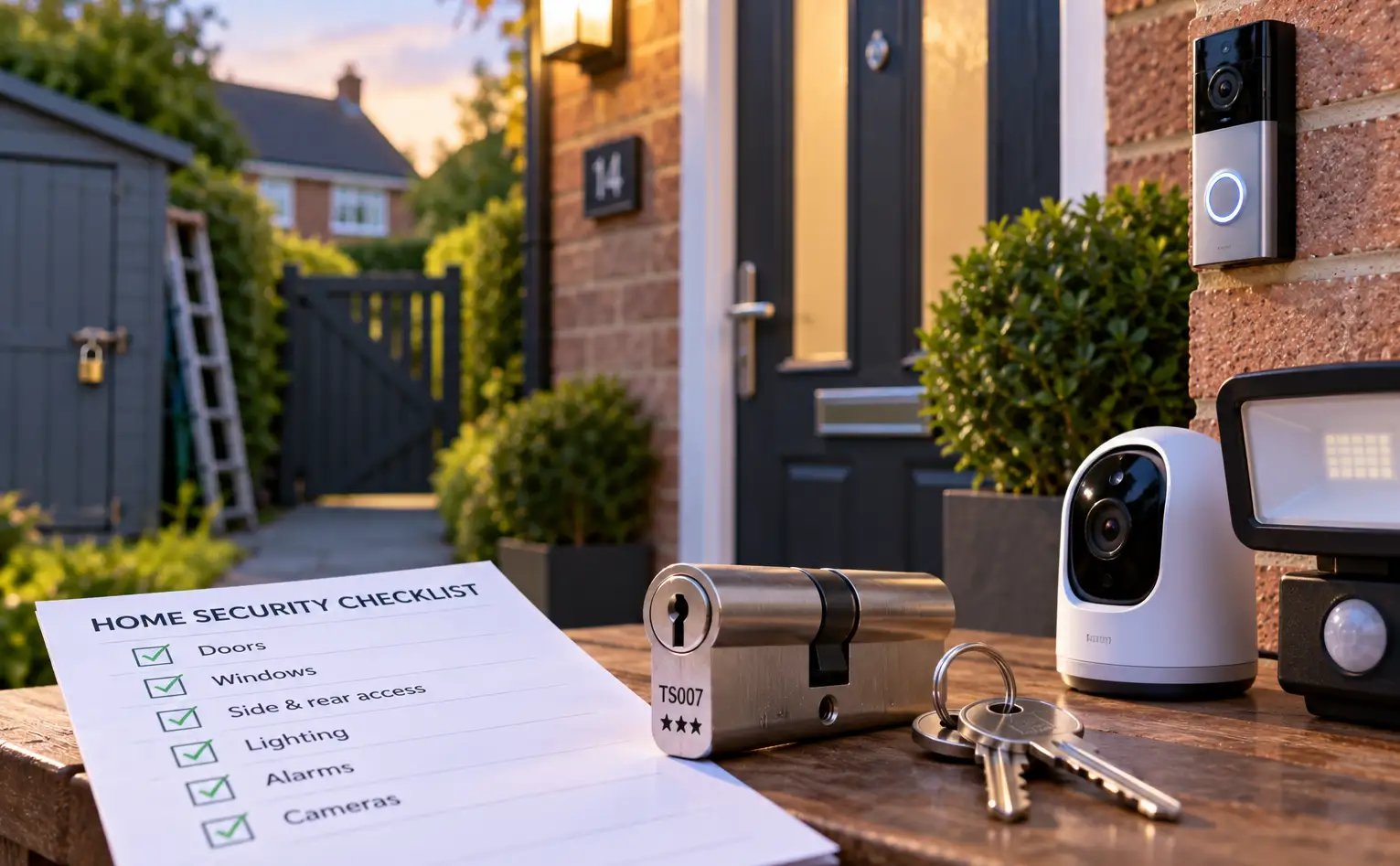
A video doorbell arrives, gets fitted above the door in an afternoon, and immediately feels like progress — you can now see who’s outside, get an alert when someone approaches, review footage after the fact. It’s a satisfying purchase. But a camera may record a break-in without doing anything to prevent it. The lock on the door the camera is mounted next to can matter considerably more, and it’s usually the thing nobody checks.
This isn’t an argument against cameras, alarms or smart-home security. They can all have a useful place. The problem is that modern security equipment makes it remarkably easy to spend money without establishing whether your house is actually any harder to enter. A camera might show somebody approaching the back door, but if the door doesn’t lock properly, you’ve gained a recording of a weakness rather than addressed the weakness itself.
For one household, the problem might be an ageing door frame or a window that no longer locks properly. For another, an unsecured side gate gives access to a rear garden where somebody can work unseen. A house that looks reassuringly secure from the pavement can be surprisingly vulnerable once you walk around the back.
Before deciding what to buy next, it’s worth looking at the property as a whole. The most effective improvement may be something considerably less exciting than a new gadget.
Deter, delay, detect — in that order
Effective home security works in layers, and each layer has a different job.
Deterrence is about making somebody think twice before choosing your property. Good visibility, appropriate lighting, signs of occupation and visible security measures can all contribute. None guarantees that a determined intruder will go elsewhere, but together they can make a house appear less attractive as an easy opportunity.
Delay becomes important if somebody does try to enter. Secure doors, properly fitted locks, sound frames, protected windows and controlled access make entry more difficult, slower and potentially noisier. They’re the physical obstacles between an attempted break-in and somebody actually getting inside.
Detection comes into play when something suspicious happens. Cameras and alarms can alert occupants, attract attention or preserve useful evidence. Their presence may also discourage an intruder, but a notification arriving on your phone is no substitute for a door that resists being forced.
The difficulty is that detection is often the easiest part to buy. You can order a camera, fit it yourself and immediately see the result on a screen. Repairing an ageing door frame or correcting a badly fitted lock is less satisfying, and usually much less visible to visitors.
Yet the less glamorous measures have a substantial evidence base.
The College of Policing’s review of situational burglary-prevention measures highlights the importance of combining physical security with other precautions. One approach discussed in the research is known as WIDE: window locks, interior lights on timers, double door locks or deadbolts, and exterior lighting.
It isn’t a universal specification for every house, and the appropriate measures depend on the doors and windows involved. What the research illustrates is that ordinary precautions, used together, can offer substantial protection without relying on a particularly sophisticated security product.
There’s also a habit of imagining burglary exclusively as something that happens at night while everyone is away. Security needs to account for everyday life too: the back door left unsecured while somebody is gardening, the side entrance used throughout the day, or the upstairs window that becomes accessible from an extension roof.
The strongest arrangement isn’t necessarily the one with the most equipment. It’s the one that makes the obvious opportunities difficult to exploit.
The door matters more than its most expensive component
Before replacing a lock, inspect the door it’s attached to.
A secure cylinder achieves relatively little if the surrounding frame is rotten, the hinges are poorly fixed or the locking points no longer engage correctly. A door can look substantial and still have weaknesses that aren’t obvious until somebody tries to close or lock it properly.
Consider a back door that has become increasingly difficult to shut. The homeowner has learned to lift the handle firmly, lean against the door and turn the key until it catches. After a while, that awkward routine feels normal. But a door that has moved out of alignment may not be securing as intended, and the problem deserves attention before somebody starts shopping for electronic protection.
Many uPVC and composite doors use multi-point locking systems that engage at several positions along the frame. Simply pulling the door closed doesn’t always mean those points have been secured. Knowing how your particular mechanism operates, and making sure everyone in the household uses it correctly, costs nothing.
For doors fitted with euro-cylinder locks, the cylinder itself may also be worth checking. Older or lower-security designs can be vulnerable to attacks including cylinder snapping, and a suitable replacement can improve resistance without requiring a completely new door.
The TS 007 specification provides recognised security requirements for cylinders and associated hardware. The Door & Hardware Federation’s guidance on TS 007 explains two established ways of achieving three-star protection: fitting a three-star cylinder, or combining a one-star cylinder with two-star protective door furniture.
For the homeowner, the lesson is that the cylinder and the hardware surrounding it need to work together. An expensive replacement isn’t automatically an improvement if it protrudes excessively, is fitted incorrectly or is incompatible with the existing door.
Where you’re unsure what’s installed, a competent locksmith can examine the mechanism, frame and hardware before recommending a replacement. That’s often more useful than choosing a lock solely because its online description promises maximum security.
If the entire door needs replacing, look beyond the locking mechanism. PAS 24 is a recognised UK security standard used to assess the resistance of complete doorsets and windows to specified methods of attack. A tested doorset brings the door, frame, glazing, hinges and locking arrangements into the assessment rather than treating one impressive component as proof that the whole installation is secure.
There’s a regulatory distinction worth understanding here. In England, Approved Document Q provides guidance on security requirements for new dwellings and certain work within its scope. It doesn’t mean every owner of an older house must replace an existing front door because it lacks the specification expected of a new development. Wales, Scotland and Northern Ireland have their own relevant building-control or building-standards arrangements.
Independent security testing remains a useful consideration when choosing replacement products, regardless of whether a particular building-regulations requirement applies. But it shouldn’t distract from the condition of the door you already have. A sound, properly fitted and correctly operated locking system is more valuable than an impressive specification that hasn’t been installed or maintained properly.
Nor should the simplest habits be overlooked. Keys left visibly near windows or within reach of a letterbox can undermine otherwise good security, while a side or back door that’s routinely left unlocked provides an opportunity no high-security cylinder can prevent.
The weaknesses you don’t see from the street
Front doors receive most of the attention because they’re the entrance everybody uses and notices. Side passages and rear gardens are less conspicuous, which can make them particularly important when assessing a property’s security.
An unlocked side gate may allow somebody to move from a visible street into a garden where they’re much less likely to be observed. Once there, they may be able to reach a patio door, rear window or extension roof without attracting the attention they would have attracted at the front of the house.
That changes how you should think about windows.
Ground-floor openings deserve obvious attention, but so do upstairs windows accessible from flat roofs, low extensions, adjoining structures or objects that assist climbing. The condition of the frames and locking mechanisms matters just as much as their position.
Older windows with damaged catches or poorly functioning locks may offer less resistance than their appearance suggests. Suitable repairs can improve security, while independently tested replacements meeting standards such as PAS 24 may be appropriate where the existing installation has reached the end of its useful life.
Security work must also respect fire safety. Additional window locks or protective devices shouldn’t prevent occupants using a required emergency escape route. A window that’s difficult for an intruder to open is of little comfort if it also prevents somebody escaping during a fire.
Patio and sliding doors present their own considerations. Older sliding systems can sometimes have weaknesses involving their tracks, lifting resistance or locking arrangements. Appropriate anti-lift protection or improved hardware may help, but the sensible starting point is to assess the condition and design of the actual door rather than assume every installation needs the same aftermarket device.
The surrounding garden can either support these improvements or undermine them.
The Secured by Design guidance on securing houses considers access, boundaries, visibility and outbuildings alongside the security of the home itself. This is particularly relevant where fences, gates and planting affect how easily somebody can approach the building without being seen.
A tall hedge may provide welcome privacy, for example, but it can also conceal somebody working at a vulnerable entrance. Dense planting beside a rear door, or a side passage hidden from neighbouring properties, may give an intruder more cover than the occupants realise.
That doesn’t mean removing every hedge or exposing the entire property to the street. Privacy and security can coexist. The question is whether the layout creates a useful boundary for the household or a concealed route for somebody who shouldn’t be there.
Sheds and garages deserve attention for another reason. They can contain bicycles, tools and other valuables worth stealing, but they may also hold ladders and equipment that could be used to force entry to the house.
A securely locked shed is therefore doing more than protecting its own contents. It’s also making useful equipment less readily available to somebody trying to enter the main building.
Sometimes the first improvement is simply locking a gate, moving a ladder or repairing a broken window catch. None makes a particularly impressive photograph for a security-product advert, but each can remove an opportunity that an extra camera would merely record.
Lighting should make the property visible, not uncomfortable
External lighting can contribute to deterrence, particularly around entrances, side passages and areas where somebody might otherwise approach unseen. But the brightest floodlight isn’t necessarily the most useful one.
Motion-activated lighting has an obvious appeal. Somebody approaches, the light comes on and their presence becomes visible. The problem is that poorly positioned sensors can activate repeatedly because of passing traffic, wildlife or ordinary movements nearby.
After enough false activations, householders may begin ignoring the light or switch it off altogether.
Secured by Design guidance also encourages consideration of suitable low-level dusk-to-dawn lighting. For some homes, a modest light that provides consistent visibility around an entrance may work better than a powerful floodlight that regularly activates for no meaningful reason.
Other properties may benefit from carefully positioned motion lighting, particularly where permanent illumination would be unnecessary or intrusive. The right arrangement depends on the location and what needs to be visible.
Light spilling into a neighbour’s bedroom or creating severe glare across a driveway isn’t a desirable outcome simply because the installation is described as security lighting. Excessive brightness can create harsh shadows and leave other parts of the property comparatively dark.
Interior lighting has a role as well. Timers can help an unoccupied home appear less obviously empty after dark, particularly during longer absences. But one lamp switching on and off at precisely the same time every evening is a rather mechanical imitation of normal household activity.
These measures work best alongside ordinary precautions. A house that appears occupied may be less inviting to an opportunist, but lighting doesn’t make an unlocked back door secure.
The aim is to reduce obvious opportunities, improve useful visibility and avoid making the security arrangements more troublesome than they need to be.
When alarms and cameras become worthwhile
Once the physical weaknesses are understood, electronic security becomes easier to judge on its merits.
An intruder alarm can warn occupants of an attempted or successful entry, while an external sounder may attract attention and contribute to deterrence. A properly configured system can be valuable, particularly where the layout, occupancy or circumstances of the property justify it.
But alarms vary considerably. A basic audible alarm, a wireless system that sends notifications to a phone and a professionally monitored installation are not equivalent, and they shouldn’t be chosen as though they provide identical protection.
For professionally installed systems, recognised accreditation offers a useful way of assessing the installer. West Yorkshire Police’s guidance on CCTV and alarms recommends considering installers registered with established inspectorates such as the National Security Inspectorate (NSI) and the Security Systems and Alarm Inspection Board (SSAIB).
There is also a distinction between a system being installed and one being used properly. An alarm that is frequently left unset because household members find it inconvenient offers less practical benefit than its specification might suggest.
The evidence on alarms is more complicated than security marketing sometimes implies. The College of Policing’s review supports combinations of physical protection and lighting, while historical observational findings concerning alarms used alone have been more mixed. This doesn’t establish that alarms are ineffective; it cautions against assuming that the presence of one automatically makes a property secure.
Cameras deserve the same balanced treatment.
A well-positioned camera may discourage an intruder, alert the household or provide evidence after an incident. For people worried about repeated suspicious activity, deliveries or access to a secluded part of the property, those functions can be genuinely useful.
Consider a homeowner who has already installed a video doorbell, a driveway camera and another camera overlooking the rear garden. The system provides several views of the property, but the back door has a damaged frame and the side gate doesn’t lock.
A fourth camera might improve coverage. Repairing the door and securing the gate would deal directly with weaknesses the existing equipment can only observe.
The point isn’t that the homeowner should never buy another camera. It’s that the additional expense should address a real need rather than simply add another view to the app.
Camera owners should also consider privacy. Where domestic CCTV records identifiable people beyond the property’s private boundary, data protection responsibilities may arise. Property Front Page’s separate articles on home CCTV, neighbours’ privacy, video doorbells and audio recording examine those obligations in detail.
Good security shouldn’t require collecting unnecessary information about everyone living nearby.
What security labels and insurance conditions actually mean
There is no shortage of reassuring language on security products. Terms such as high security, professional grade and police-inspired sound authoritative, but they don’t all demonstrate that a product has passed recognised independent testing.
Secured by Design is different. It is the official UK police crime-prevention initiative, and its Police Preferred Specification identifies products meeting relevant recognised security standards and certification requirements.
The initiative also extends beyond individual locks and doors. It considers the design of streets, developments and buildings, including how layout and visibility may help reduce opportunities for crime. The College of Policing’s review of Secured by Design discusses evidence supporting the crime-reduction benefits of that wider approach.
For somebody buying a replacement door, window or other security product, the practical point is to check the accreditation of the specific item. A retailer describing something as security-grade isn’t necessarily making the same claim as a manufacturer whose particular product meets independently tested requirements.
Nor does certification mean a product is impossible to defeat. Recognised security testing provides evidence of performance against specified methods of attack, not an absolute guarantee against burglary.
Home insurance adds another consideration that is easy to overlook while upgrading security.
Some policies specify particular types of locks, alarm arrangements or conditions for securing a property when it is unoccupied. These requirements vary, and they won’t necessarily match whichever new product happens to look most advanced.
Replacing an insurer-required lock with an expensive alternative may not be an improvement from the policy’s perspective if the replacement fails to meet the stipulated conditions. Similarly, an app-connected alarm doesn’t automatically satisfy a requirement for a particular type of professionally maintained or monitored system.
Before making significant changes, check the policy and clarify anything you’re unsure about with the insurer. Improvements should leave both the property and the insurance arrangements in a better position.
The best security budget starts with an honest look at the house
A Victorian terrace, ground-floor flat, rural detached property and modern new-build don’t present identical risks. The age of the building, its doors and windows, surrounding access, visibility and the way the household uses it will all influence which improvements offer the greatest benefit.
That makes a fixed shopping list less useful than a proper look at the property.
Walk around the outside as though you’re seeing it for the first time. Start with the doors, their frames and the way their locks engage. Look at which windows are genuinely accessible, whether somebody can reach the rear garden without passing through a secured gate, and whether sheds, ladders or tools have been left conveniently available.
Then think about the habits inside the house. Are external doors locked when they should be, or merely pulled shut? Does everyone know how to operate the locking mechanisms properly? Is the alarm regularly set, or has it become something the household intends to use but rarely does?
You might discover that a perfectly good lock has been used incorrectly for years. Or that the rear gate needs repairing, an accessible window has a faulty catch, or the shed holding valuable tools has never been properly secured.
Those findings should help determine where the money goes.
For some households, the answer will involve a locksmith repairing a door or upgrading a vulnerable cylinder. Others may benefit most from improving rear access, replacing a failing window or installing appropriate lighting. Where the physical security is already sound, an alarm or well-positioned camera may be the logical next investment.
A particular security concern can reasonably change those priorities. Somebody dealing with repeated attempted entry may need additional detection sooner than a household simply reviewing its arrangements after moving in. The aim isn’t to follow an inflexible sequence but to understand what each improvement is intended to achieve.
Technology is most valuable when it fills a genuine gap. Another camera, sensor or app notification may be useful, but it shouldn’t be mistaken for protection against weaknesses that are still waiting to be fixed.
The strongest security measures are often the ones that never generate an alert because they’ve made entry too difficult or unattractive to attempt.
And before spending another few hundred pounds on something that connects to your phone, it’s worth checking whether the same money would do more good repairing the door beneath the camera you already own.
This article provides general property and crime-prevention information and does not constitute a personalised security, insurance, locksmithing or building-regulations assessment. Appropriate security measures depend on the construction, location, occupancy and particular risks of the property. Check any applicable insurance requirements before changing specified locks or alarm arrangements, avoid compromising emergency escape routes, and use suitably competent professionals where specialist security work is required.

