

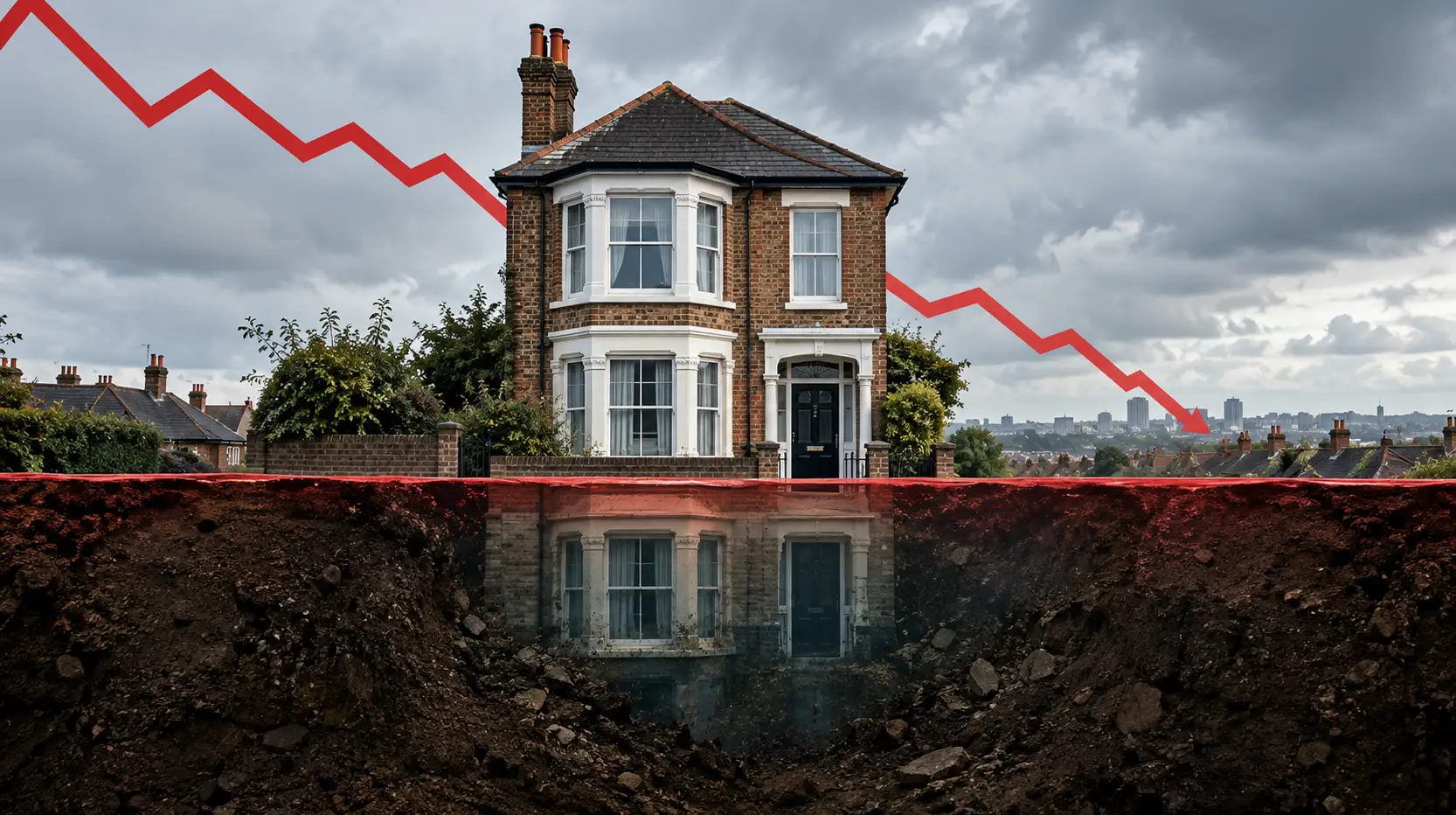
It’s possible to be entirely up to date with every mortgage payment and still discover, the moment you actually try to sell, that the numbers don’t work.
A redemption figure arrives showing more owed than the property is realistically likely to fetch, and suddenly a straightforward decision to move stops being straightforward at all. This has nothing to do with missed payments in many cases. Negative equity can exist simply because the value of the property has fallen below the borrowing secured against it.
Selling may still be possible. What changes is that a homeowner cannot simply accept an offer, use whatever the buyer pays to reduce the mortgage and walk away from the remainder. If the sale will not clear the secured borrowing, the lender — and potentially any other charge holder — has to be dealt with before the transaction can complete.
First, work out whether this is actually negative equity
The phrase gets used loosely, but not every sale that leaves the homeowner needing extra cash is technically a negative-equity sale.
Negative equity means the property is worth less than the mortgage debt secured against it. If a home would realistically sell for £240,000 but the mortgage balance is £250,000, there is negative equity before estate-agent fees, legal costs or anything else are considered.
A slightly different problem arises where the property itself is worth enough to repay the mortgage, but only just. A £250,000 property with a £248,000 mortgage is not technically in negative equity, but the seller may still be unable to complete without finding additional money once legal fees, estate-agent commission and any mortgage early repayment charge are included.
Other secured borrowing matters too. A second-charge mortgage or secured loan may have to be repaid alongside the main mortgage, so looking only at the first mortgage balance can give a misleading picture of how much equity is actually available for a sale.
The government’s guidance on preparing to sell a home recommends checking the mortgage balance, early repayment charges, other debts secured against the property and the costs of selling before deciding what the move will actually cost.
Suppose a property is likely to sell for £250,000. The mortgage redemption figure is £247,000, there is a £4,000 secured loan and the seller expects another £5,000 of estate-agent and legal costs. The property is not £6,000 into negative equity simply because the transaction costs £256,000 overall. But the seller still faces a £6,000 cash gap if all of those sums have to be met on completion.
The practical problem is real either way. The terminology simply tells you where that problem comes from.
Get the real numbers before making a decision
Three figures matter most: what the property can realistically sell for now, what it will actually cost to redeem the mortgage, and what other secured borrowing has to be cleared.
Start with the property value. An old purchase price, an optimistic asking price or an automated online estimate is not enough. Look at genuinely comparable recent sales and obtain realistic opinions from more than one local estate agent. If the figures are very close to the line, an independent valuation may become worthwhile, particularly if the lender wants stronger evidence of market value before considering a sale that leaves a shortfall.
Then establish the amount required to clear the mortgage. The outstanding balance shown on an annual statement is not necessarily the same as the amount required on completion. A redemption figure can include interest, an early repayment charge and other redemption costs. Your conveyancer will obtain the formal figure required for completion, but getting an up-to-date figure from the lender early helps establish whether the proposed sale is viable.
Finally, check for anything else secured against the property. A second charge, secured loan or other registered charge cannot simply be ignored because the first mortgage is the largest debt.
MoneyHelper’s guidance on negative equity uses the same basic test: compare the property’s current value with what remains outstanding on the mortgage.
Only when those figures are brought together can you tell whether there is genuine negative equity, a selling-cost cash gap or enough equity for the transaction to proceed normally.
Why the lender becomes part of the sale
A mortgage lender has security over the property. On an ordinary sale, the conveyancer uses part of the completion money to redeem the mortgage and the lender’s charge is then discharged. If there is not enough money to repay what is secured against the property, that normal sequence cannot simply happen in full.
Where the homeowner can provide the missing amount from savings or another legitimate source, the position may still be relatively straightforward: the buyer’s money and the seller’s additional funds together clear what has to be repaid on completion.
If the seller cannot cover the gap, the issue needs discussing with the lender before the transaction is allowed to progress too far. The lender may be willing to consider a sale where a shortfall remains, but approval should never be assumed. It may want evidence of the property’s value, the proposed sale price, the seller’s finances and the reason for selling. Other charge holders may also need to agree their position where more than one secured debt exists.
For regulated residential mortgages, the FCA’s mortgage conduct rules on sale shortfalls require firms dealing with customers in payment difficulty to make reasonable efforts to agree how a sale shortfall should be repaid and, where feasible, establish a practical repayment arrangement. That does not mean the lender has to approve every proposed sale or accept whatever terms the borrower suggests.
If the lender refuses permission for the proposed sale, ask why and what evidence or different terms it would need before reconsidering. A refusal does not necessarily end the matter. The lender’s formal complaints process may be relevant and, once that has been exhausted, the Financial Ombudsman Service may be able to consider whether the customer was treated fairly. Court remedies can exist in some circumstances, but that is specialist legal-advice territory rather than a routine selling step.
Early contact matters because discovering the problem after a buyer has paid for legal work and a survey can leave everybody involved in a transaction that was never capable of completing on the proposed terms.
The same point applies if the price changes later. If a lender has considered a sale at £250,000 and the buyer subsequently reduces the offer to £242,000 after a survey or mortgage valuation, do not assume an earlier lender agreement still applies. The lower price increases the potential shortfall and may need to be referred back to the lender and any other charge holder before the seller accepts it.
If the lender agrees to the sale, the shortfall does not disappear
Suppose a lender agrees that a property can be sold even though the completion proceeds will not repay everything owed. Completing the sale does not automatically wipe out the remaining balance.
Once the property has been sold and the proceeds applied, whatever eligible mortgage debt remains becomes the mortgage shortfall. The Financial Ombudsman Service’s guidance on mortgage shortfalls explains that the former lender, somebody acting for it or a business that later acquires the debt may seek repayment after the property has gone.
What happens next depends on what has been agreed with the lender. It may require the gap to be covered from other funds before completion, or it may accept that an outstanding balance will be repaid afterwards under separate terms.
Before agreeing to that arrangement, establish:
- exactly how much is expected to remain outstanding after completion;
- whether interest or further charges can continue on that amount;
- what repayment terms are being proposed;
- whether another company could later administer or collect the debt;
- how the arrangement may affect the borrower’s credit position.
That is one point where independent debt advice becomes particularly valuable. A monthly repayment that looks manageable while the priority is simply getting the house sold still has to sit alongside rent or another mortgage, moving costs and every other household expense afterwards.
National Debtline’s dedicated negative equity guidance covers negotiating with a lender, selling with a shortfall and the wider options where the figures no longer work. Its detailed guide is for England and Wales, so borrowers elsewhere in the UK should use advice appropriate to their jurisdiction.
The shortfall is therefore not merely a conveyancing technicality. It can become a debt that follows the seller after they no longer own the property that originally secured the borrowing.
Negative equity and mortgage arrears are different problems
A homeowner can be in negative equity while never having missed a mortgage payment. Equally, somebody can be thousands of pounds in arrears while owning a property with substantial equity.
That distinction matters because this article is about a sale that does not produce enough money to clear the secured borrowing. If payments are already being missed, court action or repossession is threatened, or the homeowner is struggling to maintain the mortgage while the property is marketed, the situation needs an arrears strategy as well.
We cover the repossession and voluntary-sale process separately because the urgency, lender obligations and practical decisions are different.
Negative equity on its own does not necessarily require immediate action either. If the mortgage remains affordable and there is no pressing reason to move, continuing to live in the property may be an option while the mortgage balance reduces or values change. That does not mean house prices are guaranteed to recover; it simply distinguishes a difficult sale today from an immediate financial emergency.
Selling may solve the property problem without solving the financial one
A seller understandably tends to focus on whether the lender will let the house be sold. The equally important question is what the homeowner’s finances look like the day after completion.
A negative-equity sale can leave somebody without proceeds for a deposit on another property, potentially still repaying a mortgage shortfall and needing to fund their next housing arrangement at the same time.
That does not automatically make selling the wrong choice. A move may be unavoidable because of separation, employment, family needs or a property that is no longer suitable. But the meaningful comparison is the financial position after each option, not simply the relief of getting the current property sold.
If the gap is modest and can be covered from savings without undermining the seller’s wider finances, the transaction may be manageable. If the sale would create a substantial post-completion debt and leave nothing available for the next home, waiting or exploring mortgage alternatives deserves much closer consideration.
Mortgage advice and debt advice perform different jobs here. A regulated mortgage adviser can explore whether there are realistic mortgage alternatives to selling, while a debt adviser can help assess whether any proposed shortfall repayment is affordable.
The practical point is not that one route is always better. It is that the sale should be judged by what it solves and what it leaves behind.
The practical bottom line
Negative equity makes selling more complicated, but it does not automatically make selling impossible.
The first question is whether the property is genuinely worth less than the debt secured against it, or whether the problem appears only after selling costs are included. The second is the size of the actual gap once current valuations, redemption figures, other secured debts and transaction costs are brought together.
If the seller can cover that gap, an otherwise ordinary sale may still be possible. If they cannot, the lender becomes part of the decision because its security cannot simply be ignored.
The most damaging approach is usually to discover the problem late. Agreeing a sale, finding a buyer and progressing conveyancing on the assumption that the lender will simply accept whatever money is available can leave everybody exposed to a transaction that cannot complete on those terms.
A better approach is less dramatic but more useful: establish the numbers early, speak to the lender before promising a timetable to a buyer, understand exactly what happens to any remaining shortfall and judge the sale by the financial position it leaves behind rather than by the relief of getting the property sold.
Important: This article provides general property and mortgage information and is not personalised financial, debt, mortgage or legal advice. Mortgage products, lender policies and individual circumstances differ, and debt and enforcement procedures can vary across England and Wales, Scotland and Northern Ireland. If a proposed sale will not clear all borrowing secured against the property, speak to the relevant lender or charge holder before committing to the transaction. If the remaining shortfall could cause financial difficulty, obtain free independent debt advice before agreeing repayment terms.

