

Four separate legal regimes cover the core safety of a rented home, each with its own trigger, its own timetable, and its own paperwork trail. Treating them as one undifferentiated “safety compliance” task is how landlords miss deadlines — each genuinely needs tracking on its own terms.
The four safety duties at a glance
| Safety area | Main cycle or trigger | Key tenant paperwork / action |
|---|---|---|
| Gas | Normally every 12 months | New tenant gets current record before moving in; existing tenant within 28 days |
| Electrical installation | At least every 5 years, or sooner if report requires | New tenant gets report before occupation; existing tenant within 28 days |
| Smoke alarms | Working alarms at start of each new tenancy | Test on first day; repair reported faults |
| Carbon monoxide alarms | Same start-of-tenancy trigger | Required around qualifying fixed combustion appliances; repair reported faults |
The important point is that the four duties don’t share one universal renewal date or one universal certificate.
Gas safety: an annual cycle, and specific paperwork
Where a landlord provides gas appliances or flues for a tenant’s use, the Gas Safety (Installation and Use) Regulations 1998 require them to be checked for safety at least every 12 months by a Gas Safe registered engineer. Relevant gas pipework also has to be maintained in a safe condition, although the annual statutory safety check itself is focused on appliances and flues.
The regulations apply across Great Britain — England, Wales and Scotland. Northern Ireland operates under separate gas-safety legislation.
The Health and Safety Executive’s gas safety guidance for landlords explains the current requirements.
The check produces a Landlord Gas Safety Record, commonly still called a CP12.
A 2018 amendment gives useful flexibility: in qualifying circumstances, you can carry out the next annual check up to two months before the deadline without losing the original annual cycle, rather than gradually moving the renewal date earlier every year.
The paperwork obligation is precise: existing tenants must be given a copy of the record within 28 days of the check, and new tenants must receive the current record before they move in. The statutory gas safety records need to be retained for at least two years.
Electrical safety: a five-year cycle with real teeth
The Electrical Safety Standards regulations require the fixed electrical installation in most covered private rented homes in England to be inspected and tested by a qualified person at least every five years, or sooner if the report itself specifies a shorter interval.
The government’s electrical safety guidance explains the current regime.
What happens next depends on what the report finds:
- C1 — Danger present: remedial work is required.
- C2 — Potentially dangerous: remedial work is required.
- FI — Further investigation required: investigation is required without delay.
- C3 — Improvement recommended: this does not by itself make the installation unsatisfactory.
Where remedial work or further investigation is required, it normally needs to be completed within 28 days of the inspection, or sooner if the report specifies a shorter period.
Once the work is completed, the relevant written confirmation must normally be provided to the tenant and the local housing authority within 28 days. A council can also request a copy of the underlying electrical report itself, which normally has to be supplied within seven days.
For relevant breaches, local councils can now impose a civil penalty of up to £40,000.
Booking the inspection with real lead time matters here, simply because remedial work can take time to arrange if the report identifies something significant.
One distinction worth keeping clear: an EICR principally concerns the fixed electrical installation. It is not the same thing as testing every portable electrical appliance supplied with the tenancy, although landlords still need to ensure appliances they provide are safe.
Smoke alarms: every storey, tested at the start of every tenancy
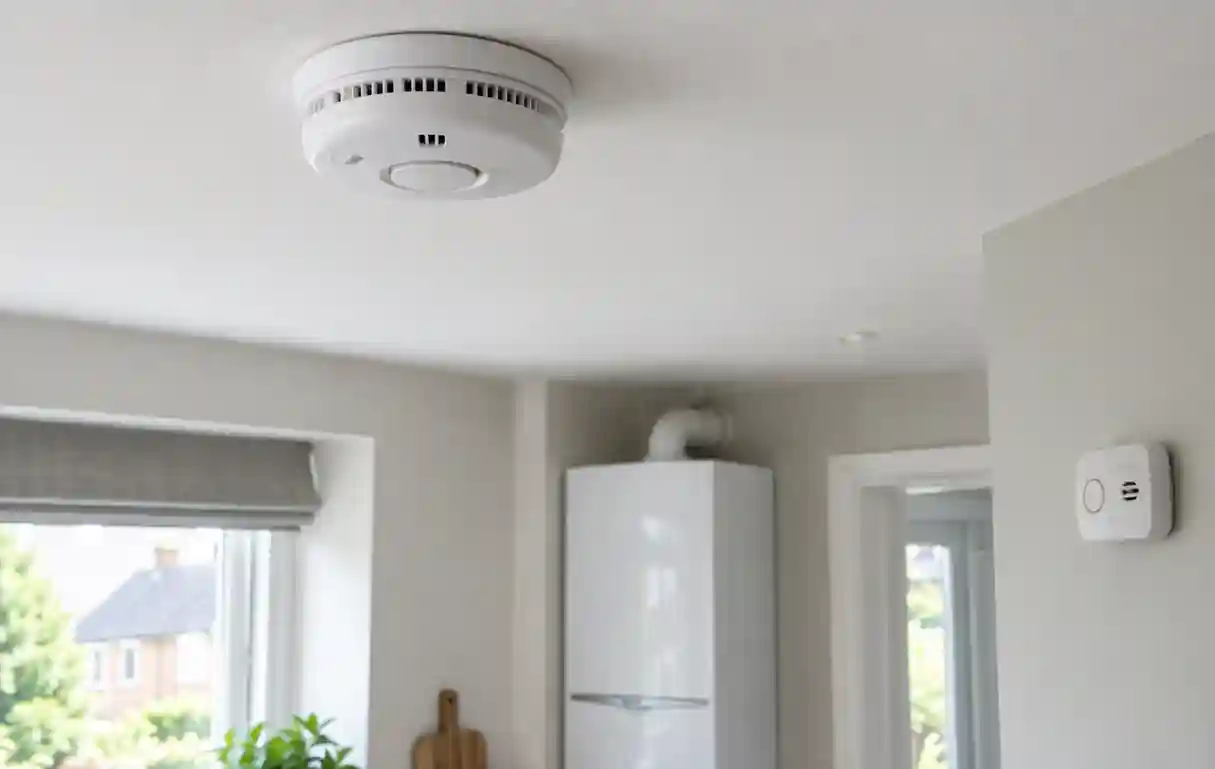
Under the Smoke and Carbon Monoxide Alarm regulations, a working smoke alarm is required on every storey of the property that contains a room used wholly or partly as living accommodation.
The obligation has two distinct parts. You must ensure the prescribed alarms are checked and in working order on the day a new tenancy begins. Once the tenancy is running, if a tenant reports that an alarm is not working properly and it is found to be faulty, you’re responsible for repairing or replacing it as soon as reasonably practicable.
Government smoke and carbon monoxide alarm guidance explains the current rules.
Ongoing routine testing during the tenancy is generally something tenants are encouraged to do themselves, but a landlord who’s been told an alarm remains faulty cannot simply leave the problem with the tenant.
Carbon monoxide alarms: broader than many landlords realise
The 2022 amendment significantly widened this requirement, and outdated advice still circulates.
A carbon monoxide alarm is now required in any room used as living accommodation that contains a fixed combustion appliance, with a specific exception for gas cookers.
That can include rooms containing gas boilers, gas fires, wood-burning stoves, oil-fired boilers and solid-fuel fires.
The old rule that focused principally on solid-fuel appliances is obsolete.
As with smoke alarms, the prescribed CO alarms must be checked and working at the start of a new tenancy, and a reported faulty alarm must be repaired or replaced as soon as reasonably practicable.
Failure to comply can lead to the local authority serving a remedial notice. Failure to comply with that notice can result in a civil penalty of up to £5,000.
Fire safety beyond the single let
For an ordinary single-household letting, the smoke-alarm rules described above form part of the basic fire-safety picture, alongside wider responsibilities around safe accommodation and any furniture supplied.
Houses in multiple occupation can carry meaningfully higher requirements. Depending on the building, occupancy, licensing conditions and fire risk, these can include more extensive alarm systems, fire doors, protected escape routes, emergency lighting or other measures.
The important point is that there isn’t one universal HMO alarm specification that applies identically to every shared property.
Blocks of flats introduce another layer again, with responsibility for communal areas and shared parts often sitting with a freeholder, managing body or other responsible person rather than solely with the landlord of one flat.
If a tenant won’t let you in for a mandatory check
This is a genuine practical problem, and it’s worth handling carefully rather than assuming urgency justifies shortcuts.
Document every attempt to arrange access — dates, methods of contact and alternative appointments offered. Communicate clearly why the check is legally required.
For gas safety, HSE guidance recognises that landlords need to be able to demonstrate that they’ve taken all reasonable steps to obtain access. Electrical-safety guidance takes a similar approach where a tenant prevents entry despite reasonable attempts.
What you should not do is simply let yourself in because a certificate is overdue. If reasonable attempts fail, take advice on the proper legal route rather than turning a compliance problem into an access or harassment dispute.
Keeping the paper trail
For every one of these regimes, keep the record itself and keep evidence of when it was given to the tenant.
Gas safety records have a statutory minimum retention period of two years. Electrical reports should be retained through to the next required inspection, alongside any remedial certificates or confirmations.
Smoke and carbon monoxide alarms don’t have an equivalent certificate cycle, but documenting the start-of-tenancy test — for example on an inventory or check-in record — creates useful evidence.
This isn’t bureaucracy for its own sake. In a dispute or council inquiry, the difference between “I have this documented” and “I’m confident this was done” is substantial.
Beyond England
Scotland applies its own housing and alarm standards alongside the Great Britain gas-safety regime. Since February 2022, Scottish homes have required interlinked smoke alarms in specified locations, a heat alarm in the kitchen and carbon monoxide protection where required.
Wales applies its own Fitness for Human Habitation regime, with its own electrical and alarm requirements.
Northern Ireland operates separate gas, electrical and housing-safety legislation rather than the Great Britain Gas Safety Regulations 1998.
Don’t assume the England alarm placement or electrical rules simply transfer across without checking the relevant national framework.
This article provides general information about property safety compliance in England as it stood at the time of writing and does not constitute legal advice. For a specific property, consider verifying current requirements against GOV.UK and HSE guidance, or consulting an appropriately qualified professional.

