

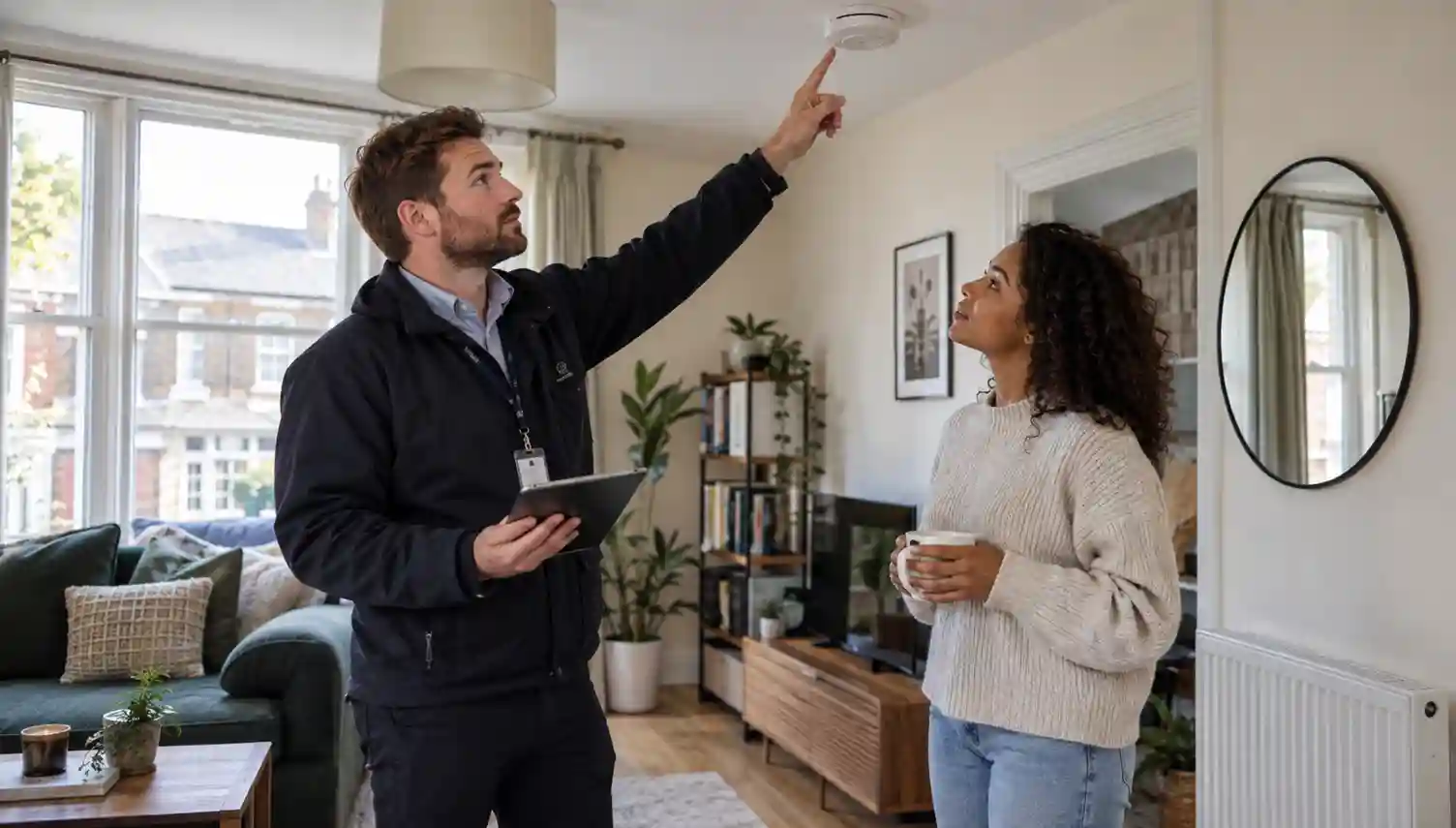
The tenancy’s signed, the tenant’s moved in, and the hard part — finding them — is over. It’s tempting to treat what follows as passive: collect the rent, fix things when they break, wait. That’s not management, it’s reaction, and the gap between the two is where most preventable problems, disputes and unnecessary costs actually live. This applies whether you’re doing the managing yourself or judging whether an agent is doing it well on your behalf.
Good management at a glance
| Area | Good management | Poor management |
|---|---|---|
| Communication | Clear route, realistic responses, important decisions documented | Messages disappear or expectations are unclear |
| Repairs | Triage, trusted contractors, repeat problems investigated | Delays and repeated temporary fixes |
| Inspections | Purposeful, periodic and recorded | None at all, or intrusive over-inspection |
| Rent | Late payments spotted quickly | Arrears discovered months later |
| Records | Safety, repairs and communications retrievable | Paperwork assumed rather than checked |
| Maintenance | Likely future work planned and budgeted | Everything waits until failure |
The individual sections below are what those differences look like in practice.
Communication that’s professional, not absent or overbearing
A tenant needs a clear, simple way to report issues, and a realistic sense of what response time to expect — not instant, but not weeks either, and consistent enough that they know what “normal” looks like. Genuine emergencies need a distinct, clearly communicated route, separate from routine requests, so a burst pipe doesn’t sit in the same queue as a sticking door.
Important decisions — agreeing a repair, discussing an inspection date, any change to how the tenancy operates — are worth documenting even when the conversation itself was verbal or informal. A quick follow-up email confirming “as discussed, we’ve agreed X” costs almost nothing and matters enormously if there’s ever a disagreement about what was actually agreed.
Equally, professional boundaries run in both directions: a tenant is entitled to expect responsiveness, not availability at all hours for anything that isn’t genuinely urgent, and being clear about that distinction from the outset prevents both under-response to real problems and over-demand for non-urgent ones.
Repairs: triage, don’t just react
Good repair management starts with genuine triage — is this urgent, does it affect safety or habitability, or is it routine — rather than treating every report with identical urgency or identical delay.
Having contractors you already trust, rather than sourcing someone fresh under time pressure every time something breaks, is one of the single highest-value things a landlord or agent can build up over time; it turns an urgent repair from a scramble into a phone call.
Approving work at a sensible level matters too — a landlord who needs to personally sign off every £40 repair creates unnecessary delay on things that don’t need it, while a landlord who never checks anything risks paying for work that wasn’t actually needed or wasn’t done well.
Checking workmanship, at least periodically, rather than assuming a completed job report means a good job, catches problems before they recur. And genuinely worth watching for: repeated “temporary” fixes to the same issue, which usually signal an underlying problem that hasn’t actually been addressed.
The statutory question of whose legal responsibility a given repair is sits in our Repairs & Property Standards section. The government’s private renting repairs guidance also sets out the core legal responsibilities. This article is about managing the process well once responsibility is established, not the underlying repair duty itself.
Inspections: purposeful, not intrusive
An inspection exists to catch small maintenance issues before they become expensive ones, confirm the property’s being looked after reasonably, and maintain a general picture of condition over time — not to check up on how someone’s living.
A sensible frequency is periodic rather than either absent or excessive; too rare and problems go unnoticed for months, too frequent and it starts to feel like surveillance rather than reasonable property oversight.
Documenting condition properly at each visit — brief notes and photographs, not just a mental impression — creates a genuinely useful record over time, both for catching gradual deterioration and for any deposit conversation at the end of the tenancy.
Respecting the tenant’s privacy and arranging access properly isn’t just good manners. For ordinary inspections or repairs, the landlord should normally give at least 24 hours’ notice and attend at a reasonable time, except where an emergency justifies immediate access.
The government’s private renting rights and responsibilities guidance explains the basic access position.
Rent and accounts: catching problems early, not late
Monitoring rent doesn’t mean anything elaborate — it means noticing a missed or late payment quickly, rather than discovering three months of arrears in a routine year-end review.
Early, calm contact when a payment’s missed — “just checking this hasn’t slipped through, everything okay?” — resolves many genuine one-off issues before they become a pattern, and it’s a fundamentally different conversation from the one you’re forced into after months of silence.
Clear payment records, and where an agent’s involved, transparent landlord statements that actually reconcile properly, aren’t optional extras — they’re the difference between spotting a problem in week one and discovering it in month four.
The detail of what to do once genuine arrears develop belongs in our Rent, Deposits & Fees section; the management point here is simpler: catch it early, and the options stay wider.
Compliance and records: the quiet part of good management
A tenancy may feel as though it has moved beyond “set-up” once the tenant is in, but some of the easiest failures happen afterwards because nobody is watching the diary.
Annual gas safety checks, electrical inspection dates, licence conditions where applicable, alarm faults reported during the tenancy, deposit records, repair logs, inspection notes and contractor invoices all need to remain organised and retrievable.
Good management therefore includes:
- a calendar of key renewal and inspection dates;
- one place where current certificates can actually be found;
- records of repair reports and what happened next;
- evidence of important tenant communications; and
- enough financial records to understand what the property is costing and producing.
The government’s landlord safety responsibilities guidance provides the official starting point for the continuing safety duties.
The detailed law belongs in our Landlord Duties & Compliance section; the management point is simply that a duty nobody is tracking is a duty much more likely to be missed.
Contractor management as a genuine skill, not an afterthought
Reliable tradespeople who know a property, or at least know what good work looks like on a rented home, are worth cultivating rather than treating as interchangeable.
Getting comparative quotes for anything beyond routine or emergency work protects against overpaying, while understanding that emergency call-out rates are genuinely higher — and reasonably so — helps set realistic expectations rather than resentment when an urgent Saturday call-out costs more than a scheduled Tuesday visit would have.
Coordinating access properly, so a tenant isn’t left guessing when someone might turn up, and checking invoices actually match the work described, are unglamorous habits that quietly prevent a lot of friction and cost over time.
Property condition is a long game, not a series of emergencies
Preventative maintenance and planned replacement — addressing a tired boiler before it fails entirely, rather than only after a mid-winter breakdown — generally leads to a better-run tenancy than always waiting for failure.
The specific savings depend enormously on the item and situation rather than following any universal multiplier worth quoting as a rule. What’s more reliably true is the pattern: small, deferred issues tend to compound, both in eventual repair cost and in tenant confidence.
The tenant relationship: professional, not personal
Good management doesn’t require friendship with a tenant, and treating it as though it does is its own kind of mistake — leading to inconsistent decisions, awkward boundary-setting, or resentment when a professional decision feels personal.
What actually matters is professionalism: responsiveness, clarity about what to expect, fairness applied consistently rather than depending on mood or how much you happen to like a particular tenant, and treating a tenant’s home with the respect that word implies, even though you own the building.
This isn’t about “keeping tenants happy” through gestures — it’s about running a reliable, predictable, fair tenancy that a good tenant has no reason to want to leave because the management itself is poor.
If you’re using an agent, oversight doesn’t stop at instruction
Full management doesn’t mean the property has left your attention entirely — it means the day-to-day tasks have.
Useful, specific questions to ask periodically: what repairs have been raised recently, and how quickly were they resolved? What did the last inspection actually find, in detail, not just “all fine”? Are contractor invoices itemised and transparent, or vague? Is there any maintenance on the horizon you should know about and budget for? Are your records — gas safety, electrical safety, deposit protection — genuinely complete and current, or is that being assumed rather than confirmed?
An agent managing well should be able to answer all of this without friction; one who can’t, or who seems irritated by the questions, is telling you something worth paying attention to.
The underlying principle
Good management isn’t collecting rent and reacting when something breaks. It’s maintaining the property, the paperwork and the relationship in a way that keeps small, predictable issues small and predictable, rather than letting them compound into something expensive or contentious.
None of this is complicated in principle — it’s simply the difference between running a tenancy actively and letting it run itself until something forces your attention.
This article provides general guidance on ongoing property management practice and does not constitute legal advice. For statutory repair obligations, access rights and rent arrears procedures, see our Repairs & Property Standards, Tenant Rights and Rent, Deposits & Fees sections respectively.

