

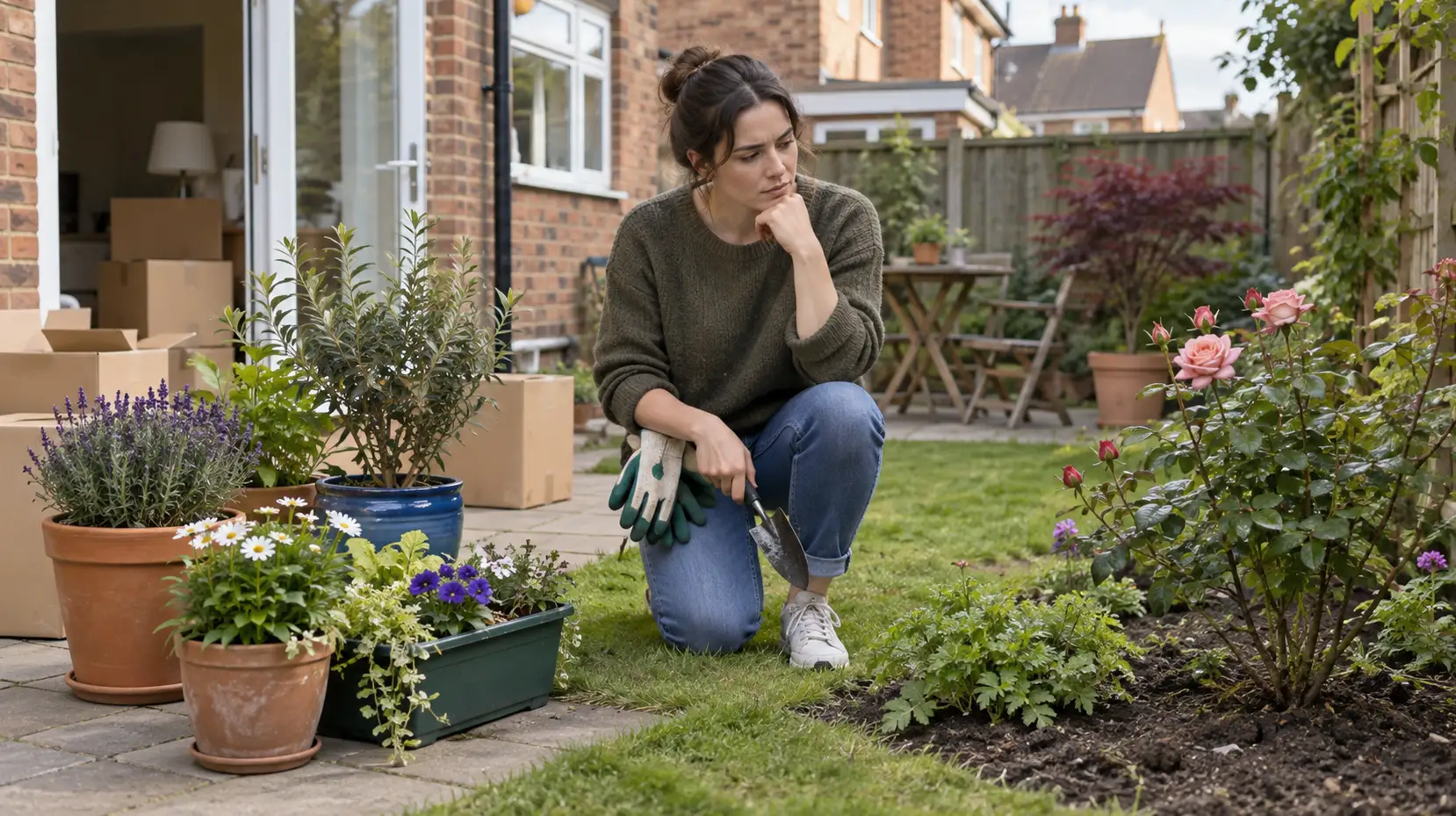
“I paid for it — surely I can take it with me?” It’s a reasonable instinct, and for anything in a pot that belongs to you, it’s also normally correct. For anything you’ve actually planted in the ground, the answer is more complicated, and the reasoning behind it surprises most tenants the first time they hear it.
Imagine spending three years turning a neglected rented garden into somewhere you actually want to sit. You’ve bought the roses, planted the shrubs, perhaps even put in a young fruit tree. You’ve watered everything through dry summers, kept the weeds down and watched plants that cost you real money become established. Then you give notice, start packing and realise that much of the garden you’ve created may have to stay behind.
It feels unfair, particularly when the landlord contributed nothing towards the planting. But the law doesn’t necessarily treat a rose bush in the ground in the same way as a rose bush in a pot, and paying for something isn’t always enough to establish that you can take it away.
The answer depends partly on what you’ve planted, but just as importantly on what was agreed with the landlord and what removing it would leave behind.
Why the ground changes the answer
English property law has a very old principle behind it: quicquid plantatur solo, solo cedit — broadly, whatever becomes attached to the land becomes part of the land. It’s the reason something that started life as a movable possession can cease to be treated that way once it has been incorporated into somebody else’s property.
Plants are a particularly clear example. Buy a young apple tree and keep it in your own container on the patio, and it will ordinarily remain yours to take when you move. Plant that same tree directly into the garden, allow it to establish roots and the legal position changes. The tree is now growing as part of the land, which belongs to the landlord.
Even HMRC’s guidance on fixtures, fittings and chattels makes the distinction plainly: plants, shrubs and trees growing in soil form part of the land, while those growing in pots are normally treated as movable belongings. The guidance concerns property transactions rather than tenancy disputes, but the underlying distinction is relevant.
That doesn’t mean every tenant who plants something automatically loses every possible right to remove it. Landlord-and-tenant law recognises exceptions for certain things tenants have added to a property.
The House of Lords discussed this in Elitestone Ltd v Morris, a case about a bungalow rather than garden plants. The judgment explained the difference between movable possessions, fixtures and things that have become part of the land. It also recognised that tenants can sometimes remove particular fixtures during their tenancy or at its end, even though those fixtures legally form part of the property while attached.
That qualification matters, but it shouldn’t be mistaken for a general right to dig up every shrub you’ve planted. The case didn’t decide whether a residential tenant could remove a rose bush, and different kinds of additions to rented property can be treated differently.
For a tenant planning to take plants away, the safer position is therefore not to rely on a technical argument about fixtures. It’s to establish clearly whether the landlord has agreed to their removal.
Permission to plant is not always permission to remove
Suppose you ask your landlord whether you can plant two climbing roses beside the fence. The landlord agrees, pleased that somebody is making an effort with the garden. Over the next three years, those roses grow into established plants, producing flowers every summer and becoming part of the garden’s appearance.
When you announce that you’re moving out, you mention that you’ll be taking them with you. The landlord objects, saying they expected the roses to remain.
It’s an entirely avoidable disagreement, but neither person necessarily thought there was anything to discuss when the roses were first planted.
Permission to improve a garden doesn’t automatically settle who gets to remove the improvement. A landlord may have agreed to the planting because they expected it to remain for future tenants. The tenant, meanwhile, may have assumed that anything purchased with their own money remained theirs.
The disagreement becomes more serious when expensive or substantial planting is involved. A few seasonal flowers may attract little attention, while an established shrub, specimen rose or fruit tree can make a noticeable difference to the garden. Removing it may also disturb other planting or leave a large gap that the landlord wants restored.
This is why an agreement should cover more than simply whether something can be planted. If you want to take it when you leave, ask for that permission expressly and confirm what you’ll be expected to do afterwards. An email agreeing that a particular shrub can be removed, provided the border is properly reinstated, is considerably more useful than relying on what both sides thought had been understood.
If you already have plants in the ground and never discussed their removal, that doesn’t mean a dispute is inevitable. Many landlords will have no objection to a tenant taking plants they clearly introduced, particularly where the garden will be left in good condition. But it’s worth asking rather than assuming, especially when the plants have become established.
A receipt can help show that you purchased something and that it wasn’t already in the garden when you moved in. It cannot, on its own, establish a continuing right to remove a plant that has become part of the land.
When taking the plant costs more than leaving it
Consider a tenant who planted a valuable shrub several years earlier and now wants to take it to their next home. The landlord agrees, on the understanding that the garden will be left tidy.
The shrub comes out, but so does a considerable amount of soil. Part of the neighbouring border is disturbed, the lawn is damaged and the tenant runs out of time to make everything good before handing back the keys.
The argument has now changed. The landlord may have agreed to the plant being removed, but not to being left with the cost of repairing the garden afterwards.
This is where the tenancy deposit becomes important. Adjudicators are generally concerned with the agreement, the condition of the property at the beginning and end of the tenancy, and whether the landlord can establish a genuine loss caused by a breach. Who originally bought the plant may be relevant background, but it won’t necessarily settle a dispute about the damage left behind.
The Tenancy Deposit Scheme’s guidance on changes to rented gardens illustrates the problem through a dispute involving a tenant-installed pergola. The tenant had made an alteration without evidence of the landlord’s permission, and the adjudicator allowed the landlord’s claim for removal because the tenancy required the property to be restored.
A pergola isn’t a rose bush, and the legal issues aren’t identical. But the practical point carries across: improving a rented garden doesn’t automatically entitle a tenant to change it permanently, and removing something may create a separate obligation to put the property back into the condition required by the tenancy.
This cuts both ways. A landlord cannot reasonably treat the deposit as a fund for improving the garden beyond its original condition. If you were entitled to remove a plant and have properly restored the ground, there may be no compensable loss. Equally, a tenant cannot assume that permission to remove an established tree excuses damage to paving, lawns or neighbouring plants.
Dated check-in photographs are particularly valuable here. A tenant who arrived to find an empty border, planted shrubs with permission and later restored the border may be in a very different position from someone who removed an established hedge that was already there when the tenancy began.
If a landlord proposes a deposit deduction, ask for the inventory, photographs, invoices and explanation supporting the amount claimed. Where the disagreement cannot be resolved directly, the relevant deposit protection scheme may be able to consider the evidence through its dispute-resolution process. In England, the government’s deposit-dispute guidance explains how that process works.
For a plant worth £30, risking a much larger argument over reinstating the garden makes little sense. Even for expensive specimens, the cost of lifting, transporting and successfully re-establishing them deserves thought before you start digging.
What if the landlord refuses?
A landlord’s refusal doesn’t necessarily settle every possible legal question. There may be an express agreement giving the tenant removal rights, or circumstances in which a particular addition qualifies as something the tenant is entitled to remove. But neither should be assumed merely because the tenant paid for it.
Where a significant plant is involved and the tenancy is silent, it’s worth reviewing any earlier correspondence and seeking advice before taking action. Digging it out first and arguing about ownership afterwards is particularly risky when the plant is valuable or its removal will visibly alter the garden.
Timing matters too. The recognised right to remove certain tenants’ fixtures is generally exercisable during the tenancy or at its end, subject to the applicable legal rules and agreements. It isn’t an unrestricted right to return months after moving out and reclaim something from the garden. Nor should a tenant assume that this fixture-removal principle necessarily applies to their particular plants.
If there’s a genuine disagreement, resolve it before handing back possession. That may involve agreeing that the plant stays in return for an agreed payment, arranging a suitable replacement, or obtaining permission to take cuttings or divisions rather than removing the original.
For tenants who are particularly attached to their gardening, that last option is often worth considering. A cutting from a favourite rose can preserve something of the garden you’ve created without the expense and disruption of moving the established plant itself.
There is also the practical question of whether a mature plant will survive being moved. Some species transplant more successfully than others, and the season, root system and size of the specimen can make a considerable difference. Even with the landlord’s agreement, a large established shrub may be far less portable than it first appears.
Before you put down roots
For tenants who enjoy gardening, the easiest way to avoid the problem is to decide which plants you would genuinely want to keep long before moving becomes a possibility.
Expensive specimens in movable pots or containers provide much greater certainty. They’re also easier to relocate without damaging the garden, although the size of the container and the plant’s health still matter. If you want to plant something substantial directly into a border, a short written agreement about whether you can remove it later is worth having before the roots become established.
Where the planting has already been done, there is no need to assume that the landlord will insist on keeping everything. Many situations can be resolved with an ordinary conversation, particularly where the tenant is offering to leave the garden in good condition. The important thing is to have that conversation before moving day, while there is still time to agree what should happen.
The law draws a distinction between plants that remain movable possessions and those that have become part of somebody else’s land. Tenancy agreements and removal rights can complicate that distinction, but the practical lesson is straightforward: don’t assume that paying for a plant means you can always take it when you leave.
A pot normally remains yours. A plant established in the landlord’s soil is a different proposition, particularly when nobody agreed what would happen to it at the end of the tenancy.
The receipt tells you who paid for the plant. It doesn’t necessarily tell you who gets to take it away.
Important: This article provides general property information and is not legal or other professional advice. The legal position depends on the tenancy agreement, any permission given, the nature of the planting, applicable property law and the location of the rented home. The property-law discussion focuses primarily on England and Wales; Scotland and Northern Ireland have separate legal systems. Where valuable plants, significant restoration costs or disputed removal rights are involved, obtain appropriate housing or legal advice before taking action. Deposit disputes should be addressed through the relevant scheme or applicable legal process.

