

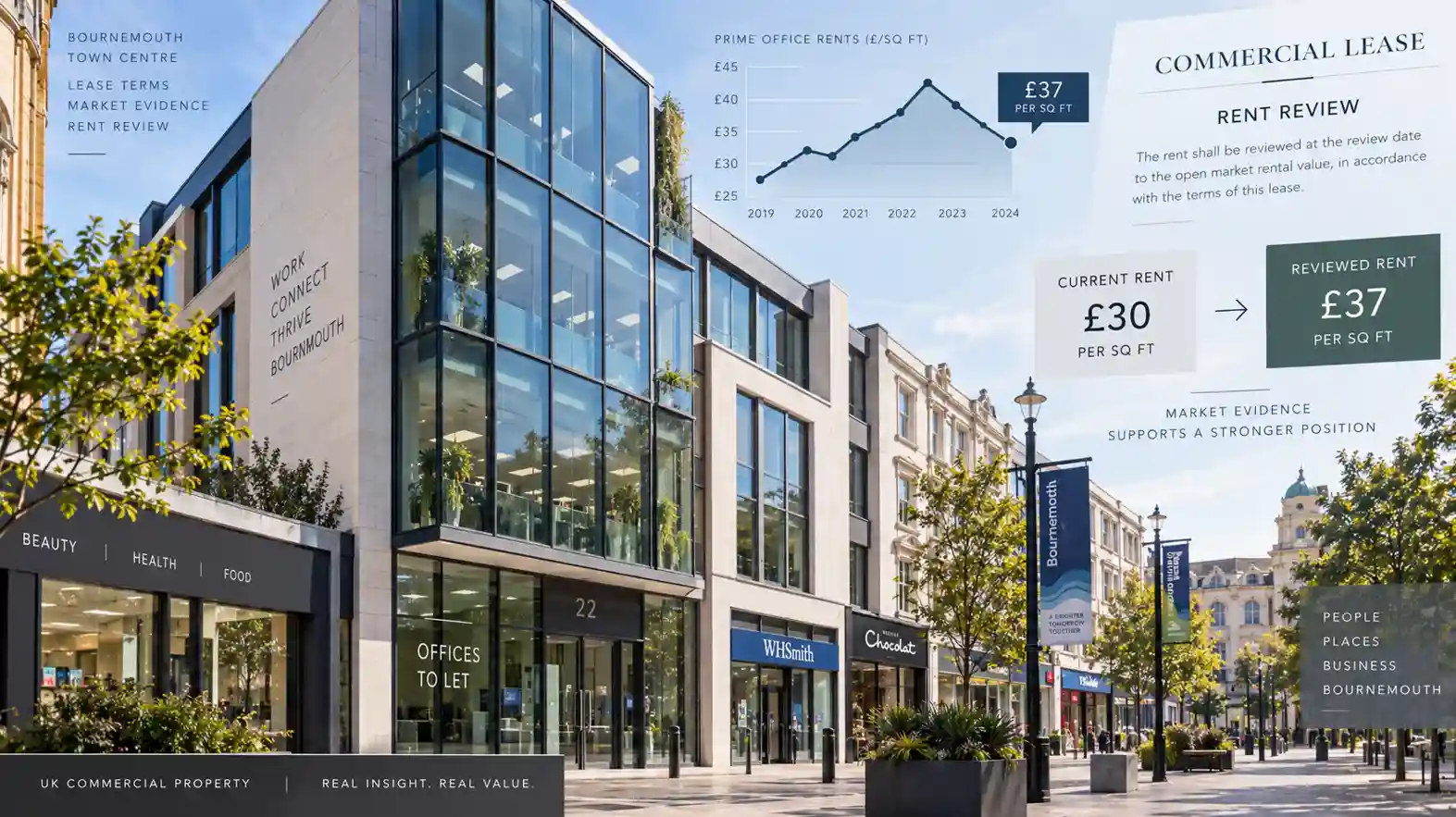
For decades, one assumption has sat underneath a large part of the commercial leasing market in England and Wales: when an upwards-only rent review arrives, the rent might rise and it might stay where it is, but it will not fall simply because the rental market has weakened.
Parliament has now legislated to change that, but the timing matters almost as much as the reform itself. The English Devolution and Community Empowerment Act 2026 received Royal Assent on 29 April 2026 and contains the new statutory framework prohibiting upwards-only mechanisms in affected business tenancies. As at 20 September 2026, however, the relevant provisions have not yet been brought into force. For an ordinary rent review taking place today under an existing lease, the starting point therefore remains the clause already in that lease.
There is also a significant transitional complication for certain renewal arrangements entered into on or after 17 March 2026. The useful question is no longer simply “have upwards-only reviews been banned?” It is which lease or arrangement is being considered, when it was entered into, what rent mechanism it contains and whether the new statutory regime applies when that mechanism needs to operate.
The legislation discussed here applies to England and Wales. Scotland and Northern Ireland have different commercial leasing regimes.
A market review is a contractual valuation exercise, not simply a look at nearby asking rents
Where a lease provides for an open-market rent review, the clause normally creates a hypothetical letting at the review date and tells the valuer how that transaction is to be analysed. The rent is then assessed using relevant market evidence, subject to the assumptions and disregards written into the lease.
Those provisions can materially affect the outcome. The hypothetical term may differ from the actual remaining lease term. The premises may be assumed to be available with vacant possession and ready for occupation. Tenant improvements may be disregarded so the occupier is not effectively charged extra rent because of value it created itself, while goodwill attributable to the tenant’s business may also be ignored.
There is no universal commercial rent-review clause. RICS guidance on commercial property rent reviews emphasises that assumptions, disregards, the hypothetical lease and the dispute-resolution machinery all need to be read from the particular lease.
Comparable evidence therefore requires considerably more analysis than simply finding another unit advertised or let at a particular headline rent. A recent letting of genuinely similar space may provide strong evidence, but lease length, break rights, repairing liability, specification, floor position, permitted use and incentive packages can all affect what the transaction actually says about market rent.
Headline and effective rent can be particularly different. A tenant agreeing £100,000 a year alongside a substantial rent-free period or landlord contribution has not necessarily produced equivalent evidence to another occupier agreeing £95,000 with little or no incentive. The evidence has to be adjusted and interpreted rather than copied mechanically.
The lease will also determine how disagreement is resolved. Many clauses allow an unresolved review to be referred to an independent expert or arbitrator. Reviews can remain outstanding beyond the contractual review date and later take effect retrospectively once agreed or determined, potentially producing a balancing payment and, depending on the drafting, interest.
That valuation machinery remains important after the new legislation begins. The reform changes whether an affected clause can prevent the rent moving fully to the figure produced by the agreed mechanism; it does not remove the underlying exercise of establishing that figure in the first place.
What an upwards-only clause does — and what the 2026 Act changes
An upwards-only open-market review typically compares the market rent produced by the review machinery with the rent already being paid and makes the higher figure the new rent.
If the passing rent is £100,000 and the review establishes an open-market figure of £110,000, the rent rises to £110,000. If the market figure is only £90,000, the upwards-only provision prevents that fall and the rent remains £100,000.
The economic significance is straightforward. The landlord participates in rental growth while being protected contractually against a fall at review. That characteristic has historically supported predictable income streams, investment pricing and lending assumptions, while leaving tenants potentially paying above prevailing market rental value after a downturn.
Section 100 and Schedule 37 of the English Devolution and Community Empowerment Act 2026 create a different framework. Once the relevant provisions are commenced, affected rent-review clauses will no longer be able to override specified objective rent-setting mechanisms merely to prevent the resulting rent from moving downwards.
The legislation is broader than the familiar open-market wording. The statutory reference amount can derive from market rent, inflation or another index or multiplier, the tenant’s turnover or other specified objective measures. Where the review mechanism produces one figure but another provision forces the passing rent above it solely because of an upwards-only feature, the new regime is designed to make that restrictive element ineffective.
The legislation also deals with who can make the review machinery operate. For affected tenancies, the tenant will be given power to trigger a review by written notice even where the lease itself gives that power only to the landlord, and to take steps necessary to make the review effective. That matters in a falling market: without such a provision, a landlord that expected the reviewed rent to fall could otherwise have an incentive not to initiate the process at all.
The reform therefore changes more than the final mathematical floor. It alters the balance of the review machinery itself.
The law has changed, but the operative position has not changed yet
The distinction between enactment and commencement is the most important current point.
The Act is law and the upwards-only provisions are on the statute book, but section 100 and Schedule 37 require commencement rather than coming fully into force automatically on Royal Assent. The Act’s commencement framework leaves the remaining provisions to be brought into force on dates appointed by the Secretary of State.
As at 20 September 2026, no commencement date for the rent-review prohibition has been set. A tenant whose existing commercial lease is undergoing an ordinary contractual review today therefore cannot simply disregard an upwards-only provision because Parliament has legislated against such clauses for future affected arrangements. Until the new regime applies to the relevant tenancy, the existing lease remains the starting point.
The same caution applies when negotiating a genuinely new lease today. An upwards-only provision can still form part of a lease before commencement where current law permits it, but landlord and tenant are now negotiating against a very different future backdrop: Parliament has already decided that the model should not continue for affected arrangements once the new regime is switched on.
Existing leases also need careful description. The Act does not generally rewrite the ordinary review machinery of leases already granted simply because they contain an upwards-only provision. Its main prohibition is directed at relevant tenancies granted or varied after commencement, subject to the detailed transitional provisions. There are also provisions dealing with superior leases and subtenancies, so broad statements that nothing in an existing lease can ever be affected would go too far.
For most occupiers facing an ordinary review under an existing lease today, however, the practical position remains straightforward: the lease that already exists continues to govern that review.
Why 17 March 2026 already matters
The most easily missed part of the new regime concerns tenancy renewal arrangements.
Schedule 37 deliberately prevents certain arrangements entered into on or after 17 March 2026 from receiving the same pre-commencement protection that would otherwise apply to arrangements made before the new rules come into force.
The legislation describes a tenancy renewal arrangement broadly enough to cover arrangements under which the grant of a new tenancy can be required by the existing landlord or tenant. In practice, that can include contractual renewal options and other arrangements capable of compelling a further tenancy.
This does not mean the upwards-only prohibition became generally operative on 17 March 2026. Rather, an arrangement entered into from that date cannot safely be treated as grandfathered merely because it predates formal commencement.
That is particularly important where parties are agreeing a lease now that contains an option for another lease later, or are entering into a separate contractual renewal arrangement with an existing tenant. The rent-setting machinery in the future tenancy may ultimately need to comply with the new regime even though the contractual route to that tenancy was agreed before commencement.
For agents, landlords, investors and occupiers, this is therefore one part of the legislation that should already be influencing drafting decisions rather than being treated purely as a future issue.
Not every pre-agreed rent increase is the same thing
One risk of discussing an “upwards-only ban” is that it can sound as though every future commercial lease must allow the rent to fall whenever the market weakens. That is too simplistic because different rent structures operate in fundamentally different ways.
An open-market review asks what the hypothetical market letting would produce under the assumptions in the lease. Once the new rules apply, an affected clause should not be able to prevent the passing rent falling to the relevant market-derived amount merely because the previous rent was higher.
Index-linked rent is different because the reference point is an inflation or other index rather than the local occupational market. The Act’s framework is capable of catching provisions that prevent the rent reflecting a downward result produced by the specified index mechanism. It also gives the Secretary of State power to make exceptions by regulation, with the explanatory material identifying caps and collars as an area in which exceptions may potentially be created. Until those regulations exist, their eventual treatment should not be assumed.
Turnover rent can also fall within the framework where the rent depends on the tenant’s business performance but another provision prevents the passing rent moving fully to the figure that mechanism produces.
A genuinely predetermined stepped rent is conceptually different. If the lease says from the outset that rent will be £100,000 for years one to three, £110,000 for years four to six and £120,000 thereafter, the numbers are already known when the lease is granted. That is not the same as a review whose eventual outcome has to be calculated later from market rent, inflation or turnover.
Abolishing upwards-only review mechanisms therefore does not prevent landlords and tenants agreeing different ways of structuring rental cash flow. It changes the operation of particular variable mechanisms rather than turning every commercial lease into a conventional open-market lease capable of moving freely in either direction.
A falling market shows why the mechanism matters
Consider three otherwise similar commercial units whose local open-market rental value has fallen by 10% since their leases were granted.
The first has an existing upwards-only open-market review. Under today’s law, assuming the clause operates conventionally, the review may establish that market rent has fallen but still leave the passing rent unchanged because the contractual floor is the rent already being paid.
The second has an index-linked mechanism. If the relevant index has risen, the rent may increase despite occupational rents in the local property market having fallen because the lease is tracking inflation rather than local open-market rental value.
The third has predetermined stepped rents. Its next increase happens because the parties committed to that number when the lease was signed, not because anyone is reassessing the rental market today.
All three occupiers can therefore find themselves paying more than contemporary open-market evidence for three entirely different contractual reasons.
Once the new statutory regime applies, the first category changes materially for affected leases because the upwards-only protection should no longer be able to override the market-derived reference amount in the way it previously did. But that does not transform an index-linked or predetermined stepped lease into an open-market review.
What the rent can become still begins with the mechanism the parties actually agreed.
What landlords, tenants and agents should be doing now
For an existing lease undergoing a review today, the immediate task remains conventional: read the clause, establish its assumptions and disregards, assemble the best comparable evidence and understand the dispute mechanism. The fact that upwards-only reviews are due to be prohibited for affected future arrangements does not retrospectively rewrite an ordinary existing review that is currently valid.
For a genuinely new lease being negotiated now, the decision is more strategic. Parties can still negotiate under the law currently in force, but the legislative direction is no longer uncertain. That should influence decisions about review structure, lease length, renewal options and the value each side places on income certainty.
For a renewal option or other tenancy renewal arrangement entered into on or after 17 March 2026, the statutory provisions require particular attention now because those arrangements have deliberately been denied the normal pre-commencement protection.
The implications extend beyond individual rent negotiations. For owners and investors, an affected future rent review capable of moving down as well as up produces a different income-risk profile from a review protected by a passing-rent floor. That can feed into underwriting, financing and pricing, although the effect will depend on the wider lease terms, asset and market rather than on the rent-review mechanism in isolation.
The headline is therefore correct: upwards-only rent review is being removed from a substantial part of future commercial leasing in England and Wales. The mistake would be assuming it has already disappeared from every lease.
As of 20 September 2026, it has not.
This article provides general commercial-property and legal-context information and does not constitute legal, valuation, surveying, tax, financial or investment advice. The discussion of the English Devolution and Community Empowerment Act 2026 concerns England and Wales. Section 100 and Schedule 37 are enacted but, as at 20 September 2026, the relevant rent-review provisions have not yet been brought fully into force. Commencement, transitional provisions and any regulations concerning exceptions should be checked for the particular transaction before a lease, renewal arrangement or rent-review strategy is agreed.

